

A side-by-side comparison of growing cannabis in pots; fabric pot (left) and a traditional plastic pot (right).
Table of Contents
Key Takeaways
- Root Health is Paramount: The primary difference between fabric and plastic pots lies in their impact on root health. Fabric pots promote healthier, more fibrous root systems through a process called “air pruning.”
- Air Pruning Prevents Root Circling: Fabric pots allow root tips to be exposed to air, which prunes them and encourages the growth of a dense, lateral root mass. Plastic pots lead to root circling, which can strangle the plant and stunt its growth.
- Water Management Differs Significantly: Fabric pots offer superior drainage and prevent overwatering, but they also dry out much faster, requiring more frequent watering. Plastic pots retain moisture longer but carry a higher risk of waterlogged soil and root rot.
- Temperature Regulation: The breathable nature of fabric pots helps to keep the root zone cool in hot weather, while plastic pots can overheat, stressing the plant.
- Cost and Durability: Plastic pots are cheaper and more durable, often lasting for many years. Fabric pots are less expensive initially but have a shorter lifespan (1-3 seasons) and may have a higher long-term cost.
1. Introduction: The Foundation of a Healthy Plant
Choosing the right container for your cannabis plants is one of a cultivator’s most fundamental yet crucial decisions. The pot you choose is more than just a vessel for soil; it is the foundation of your plant’s root system and, by extension, its overall health, vigor, and yield potential. For decades, the classic plastic pot has been the standard for growers worldwide. However, the rise of fabric pots has sparked a debate among cultivators: which container truly provides the best environment for growing cannabis?
Whether you’re growing from premium cannabis seeds from seedbanks.com or from clones, this guide will provide an in-depth, science-backed comparison of fabric pots and plastic pots. We will explore the critical role of root health, delve into the science of air pruning versus root circling, and analyze the pros and cons of each container type. By the end of this guide, you will have the knowledge and confidence to choose the perfect pot for your cannabis cultivation needs, ensuring a healthy foundation for a bountiful harvest.
2. The Science of Root Development: Air Pruning vs. Root Circling
The most significant difference between fabric and plastic pots lies in how they affect the development of the plant’s root system. A healthy, robust root system is essential for nutrient uptake, water absorption, and overall plant stability. The design of the container directly influences the structure and efficiency of the roots.
What is Air Pruning?
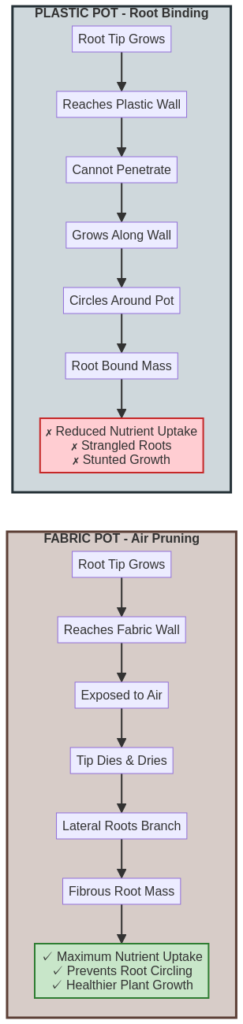
Air pruning is a natural process that occurs when plant roots are exposed to air. In a fabric pot, the porous material allows root tips to grow through the fabric and into the open air. This exposure causes the root tip to dry out and die off, which in turn signals the plant to send out new, fibrous feeder roots from further back on the primary root. This process repeats itself, creating a dense, highly efficient root mass that fills the entire container. A 2010 study in HortScience highlighted how container design can significantly impact root growth and prevent deformation [1].
The benefits of air pruning are clear: a more extensive root system means greater surface area for water and nutrient absorption, leading to a healthier, more vigorous plant with higher yield potential.
The Dangers of Root Circling
In a traditional plastic pot, the roots grow outward until they hit the impermeable plastic wall. With nowhere else to go, the roots are forced to turn and continue growing along the inside of the pot, creating a tangled, circling mass. This condition, known as being “root-bound,” can have severe consequences for the plant.
Root-bound plants have a less efficient root system, making it difficult for them to absorb water and nutrients. The circling roots can also constrict and strangle each other, leading to stunted growth, nutrient deficiencies, and a plant that is more susceptible to stress and disease. A study on the effects of container size and design found that smooth-sided plastic containers often result in deformed roots, which can negatively impact long-term plant health [2].
3. Fabric Pots: The Breathable Solution
Fabric pots, also known as smart pots or grow bags, are made from a thick, porous, non-woven fabric. This breathable material is the key to their superior performance, as it allows for excellent aeration, drainage, and, most importantly, air pruning.
Pros of Fabric Pots
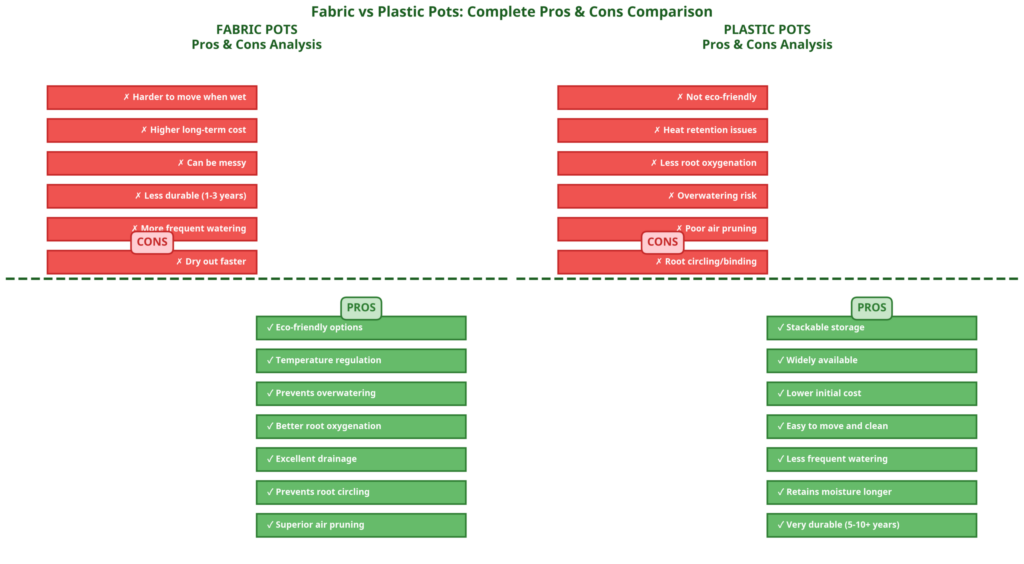
- Superior Root Health: The primary advantage of fabric pots is their ability to promote a healthy, fibrous root system through air pruning. This prevents root circling and allows the plant to develop a more efficient root mass.
- Excellent Drainage: The porous fabric allows excess water to drain freely from the pot, making it virtually impossible to overwater your plants. This is especially beneficial for new growers who are still learning the art of watering.
- Improved Aeration: The breathable material allows for excellent oxygen exchange in the root zone, which is essential for healthy root function and microbial life in the soil.
- Temperature Regulation: Fabric pots help to keep the root zone cool in hot weather through evaporative cooling. This prevents the roots from overheating, which can stress the plant and inhibit growth.
Cons of Fabric Pots
- Frequent Watering: The excellent drainage and aeration of fabric pots also mean that they dry out much faster than plastic pots. This requires more frequent watering, which can be a drawback for some growers.
- Lower Durability: Fabric pots are not as durable as plastic pots and typically only last for 1-3 growing seasons before they begin to break down.
- Potential for Mess: Watering fabric pots can sometimes be a messy affair, as water can seep through the sides of the pot.
- Higher Long-Term Cost: While the initial cost of fabric pots may be comparable to plastic pots, their shorter lifespan means that the long-term cost can be higher.
4. Plastic Pots: The Traditional Choice
Plastic pots have been the standard in the horticulture industry for decades, and for good reason. They are cheap, durable, and widely available. However, their impermeable design also has some significant drawbacks, particularly when it comes to root health.
Pros of Plastic Pots
- Excellent Water Retention: Plastic pots retain moisture much longer than fabric pots, which means less frequent watering. This can be a significant advantage for growers who are unable to water their plants every day.
- High Durability: Plastic pots are extremely durable and can last for many years, making them a very cost-effective option in the long run.
- Easy to Clean and Sterilize: The smooth, non-porous surface of plastic pots makes them very easy to clean and sterilize between grows, which helps to prevent the spread of pests and diseases.
- Portability: Plastic pots are rigid and easy to move, even when filled with soil and a large plant.
Cons of Plastic Pots
- Root Circling: The biggest drawback of plastic pots is that they promote root circling, which can lead to a host of problems, including stunted growth and nutrient deficiencies.
- Poor Drainage and Aeration: The impermeable walls of plastic pots can lead to poor drainage and a lack of oxygen in the root zone, which can create an anaerobic environment and increase the risk of root rot.
- Heat Buildup: Plastic pots, especially black ones, can absorb and retain a significant amount of heat, which can stress the plant and damage the roots.
5. Head-to-Head Comparison: Fabric vs. Plastic
To help you make an informed decision, here is a head-to-head comparison of fabric and plastic pots across several key categories.
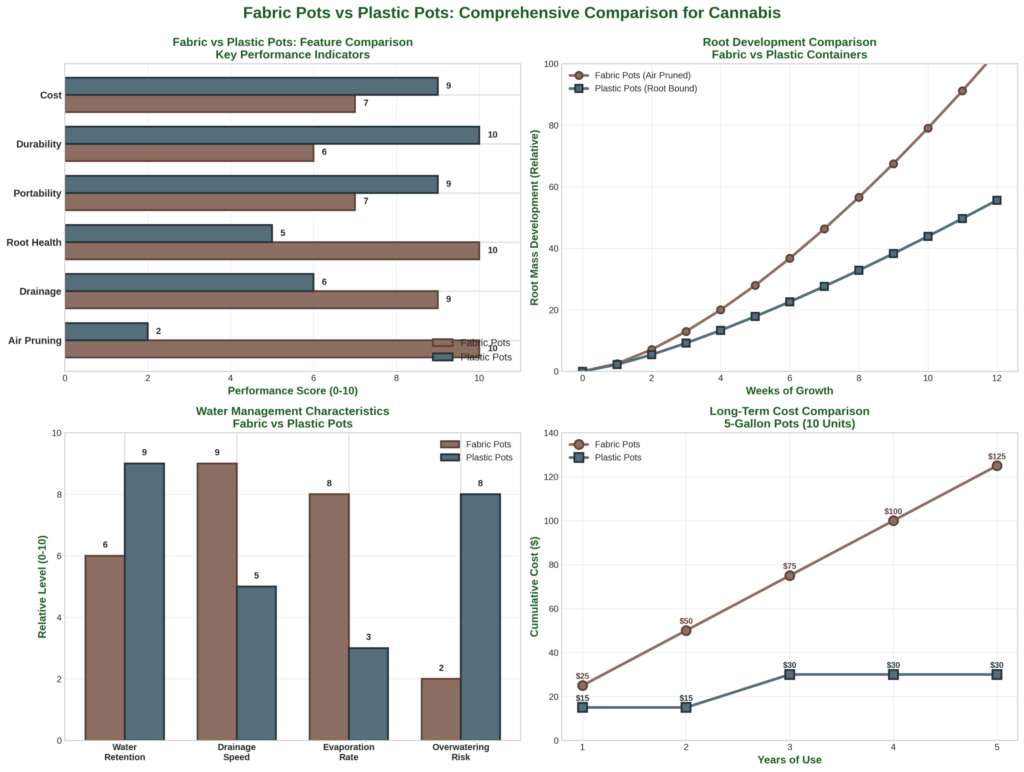
| Feature | Fabric Pots | Plastic Pots | Winner |
| Root Health | Promotes air pruning and a fibrous root mass. | Leads to root circling and a tangled root mass. | Fabric |
| Drainage | Excellent drainage, prevents overwatering. | Poor drainage, high risk of overwatering. | Fabric |
| Aeration | High oxygen exchange in the root zone. | Low oxygen exchange, risk of anaerobic conditions. | Fabric |
| Watering | Requires frequent watering. | Retains moisture, requires less frequent watering. | Plastic |
| Temperature | Keeps roots cool through evaporative cooling. | Can overheat, stressing the plant. | Fabric |
| Durability | Lasts 1-3 seasons. | Lasts 5-10+ years. | Plastic |
| Cost | Higher long-term cost. | Lower long-term cost. | Plastic |
6. Which Pot is Right for You?
The choice between fabric and plastic pots ultimately comes down to your individual needs and growing style.
Choose fabric pots if:
- You want the healthiest possible root system and the highest potential yield.
- You are a new grower and are concerned about overwatering.
- You are growing in a hot climate and are concerned about root zone temperatures.
- Choose plastic pots if:
- You are on a tight budget and are looking for the most cost-effective option.
- You are unable to water your plants frequently.
- You need a durable, long-lasting container that is easy to move and clean.
For most growers, the superior root health and overall plant vigor offered by fabric pots make them the clear winner. The benefits of air pruning are simply too significant to ignore. However, plastic pots can still be a viable option for those on a budget or with specific watering constraints.
Related Guides
- The Complete Beginner’s Guide to Growing Cannabis Indoors
- The Complete Guide to Growing Sativa Strains
- The Ultimate Guide to Cannabis Harvesting
- Training Techniques for Bigger Yields
- Troubleshooting Nutrient Deficiencies
- Climate Control Equipment Guide
- Cannabis Nutrients Buyer’s Guide
7. FAQs: Growing Cannabis in Pots (Fabric vs Plastic pots)
Can I reuse fabric pots?
Yes, fabric pots can be reused for 1-3 seasons. To reuse them, simply empty the old soil, wash the pot with soap and water, and then sterilize it with a solution of bleach or hydrogen peroxide and water.
Do I need to use a saucer with fabric pots?
Yes, it is a good idea to use a saucer with fabric pots to catch any excess water that drains from the pot. This will help to prevent messes and protect your floors.
What size fabric pot should I use for my cannabis plants?
The ideal pot size depends on the size of your plant and your growing style. For most indoor grows, a 3-5 gallon fabric pot is a good choice. For larger outdoor plants, a 10-20 gallon pot may be necessary.
Can I use fabric pots in a hydroponic system?
Yes, fabric pots can be used in some types of hydroponic systems, such as drip irrigation or ebb and flow systems. However, they are not suitable for deep water culture (DWC) systems.
Are there any eco-friendly alternatives to plastic pots?
Yes, in addition to fabric pots, there are a number of other eco-friendly container options available, such as pots made from recycled materials, biodegradable pots, and even pots made from cow manure. Research into these alternatives is ongoing, with some studies showing promising results [3].
Start with premium genetics from Official Cannabis Seeds, Blue Dream, or Sour Diesel, and grow with confidence using the right medium for your garden.
8. Scientific References
[1] Amoroso, G., Frangi, P., & Piatti, R. (2010). Effect of Container Design on Plant Growth and Root Deformation of Littleleaf Linden and Field Elm. HortScience, 45(12), 1824-1828. https://journals.ashs.org/view/journals/hortsci/45/12/article-p1824.xml
[2] NeSmith, D. S., & Duval, J. R. (1998). The Effect of Container Size. HortTechnology, 8(4), 495-498. https://swfrec.ifas.ufl.edu/docs/pdf/veg-hort/transplant/trans_cs1.pdf
[3] Conneway, R., Verlinden, S., & Koeser, A. K. (2015). Use of alternative containers for long-and short-term greenhouse crop production. HortTechnology, 25(1), 26-33. https://journals.ashs.org/horttech/view/journals/horttech/25/1/article-p26.xml