
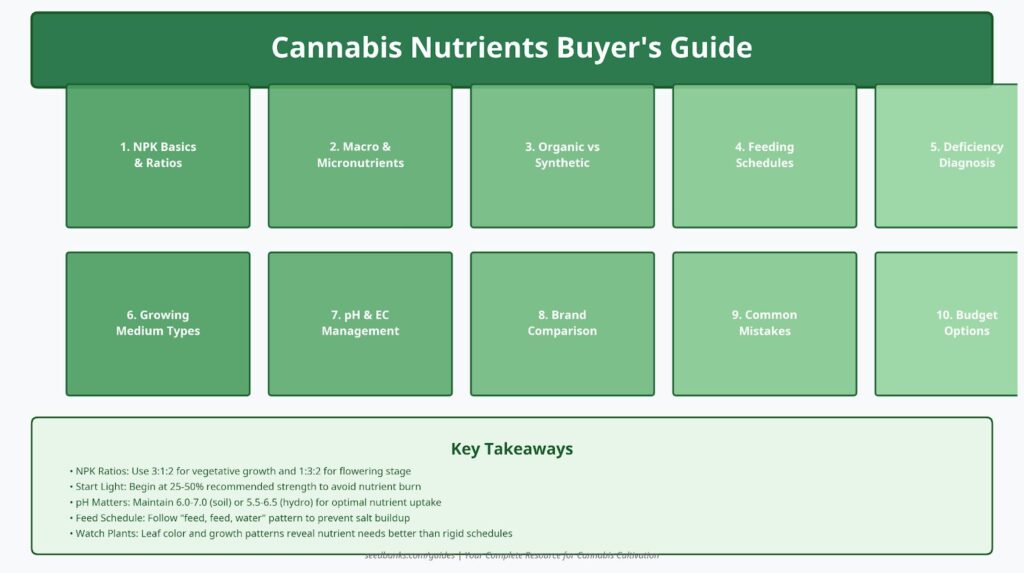
Split comparison: Synthetic vs. Organic nutrients for cannabis cultivation
Table of Contents
Key Takeaways
- Organic Nutrients Build Living Soil: Organic nutrients feed soil microorganisms that break down organic matter into plant-available forms. This creates a living soil ecosystem that buffers pH, improves nutrient retention, and produces complex terpene profiles valued by connoisseurs. However, organic nutrients release slowly and require time to establish beneficial microbial populations, making them less suitable for fast-growing autoflowers or hydroponic systems.
- Synthetic Nutrients Provide Immediate Availability: Synthetic nutrients deliver minerals in forms plants absorb immediately, allowing precise control over nutrition and rapid correction of deficiencies. This precision makes synthetic nutrients ideal for hydroponic systems, fast-growing autoflowers, and growers seeking maximum yields. However, synthetic feeding requires careful monitoring, frequent adjustments, and provides no benefit to soil biology.
- Flavor Differences Are Real: Blind taste tests consistently show that experienced cannabis users can distinguish organically grown cannabis from synthetically fed plants. Organic cannabis typically exhibits more complex terpene profiles with enhanced flavor depth, while synthetic cannabis may taste slightly harsher or less nuanced. The difference results from organic nutrients supporting diverse microbial activity that influences terpene production.
- Cost Considerations Favor Organics Long-Term: While quality synthetic nutrient lines cost sixty to one hundred fifty dollars for a complete grow, organic amendments cost thirty to sixty dollars and improve soil quality over time. Growers reusing organic soil save money with each successive grow as the living soil ecosystem matures. Synthetic nutrients must be purchased for every grow with no residual benefit.
- Environmental Impact Differs Dramatically: Organic nutrients derive from renewable sources, support soil health, and integrate into natural nutrient cycles. Synthetic nutrients require energy-intensive manufacturing, can accumulate as salts in soil, and contribute to water pollution when runoff reaches waterways. For environmentally conscious growers, organic nutrients align better with sustainable practices.
- Your Choice Depends on Growing Method: Hydroponic and coco coir growers must use synthetic nutrients, as these inert media cannot support the microbial life organic nutrients require. Soil growers can choose either approach based on priorities. Organic nutrients suit growers valuing flavor, sustainability, and soil health. Synthetic nutrients suit those prioritizing yield, precision control, and rapid growth.
Introduction: Understanding Cannabis Nutrition (Synthetic vs Organic nutrients)
Cannabis plants require sixteen essential nutrients to complete their life cycle, produce vigorous growth, and develop potent, flavorful flowers. Three macronutrients—nitrogen (N), phosphorus (P), and potassium (K)—are needed in large quantities and form the familiar NPK ratio displayed on nutrient packaging. Secondary macronutrients including calcium, magnesium, and sulfur support critical plant functions, while micronutrients like iron, manganese, zinc, copper, boron, molybdenum, and chlorine are required in trace amounts but remain essential for healthy development.
The fundamental question facing every cannabis grower is not whether to provide these nutrients, but how to deliver them. This choice between organic and synthetic nutrition represents one of the most significant decisions in cultivation, influencing everything from growing methods and costs to flavor profiles, environmental impact, and cultivation philosophy.
Organic nutrients derive from once-living materials including plant matter, animal byproducts, and mineral deposits. These materials must be broken down by soil microorganisms before plants can absorb the nutrients they contain. This biological process creates a living soil ecosystem where bacteria, fungi, protozoa, and other organisms work in symbiosis with plant roots, gradually releasing nutrients while improving soil structure and health.
Synthetic nutrients, also called mineral or chemical nutrients, are manufactured compounds that provide nutrients in forms plants absorb immediately. These precisely formulated solutions bypass biological processes, delivering nutrition directly to roots in exact ratios designed for specific growth stages. This immediate availability allows growers to control nutrition with scientific precision, rapidly correcting deficiencies and optimizing growth rates.
The debate between organic and synthetic nutrition extends beyond simple nutrient delivery. It encompasses questions of flavor quality, environmental sustainability, growing philosophy, and practical considerations including cost, complexity, and compatibility with different growing systems. Some growers view organic cultivation as superior, producing cleaner medicine with better flavor. Others see synthetic nutrients as more efficient, reliable, and capable of producing higher yields.
The truth is that both approaches work exceptionally well when properly implemented. The “best” choice depends entirely on your growing method, priorities, experience level, and values. A hydroponic grower has no choice but to use synthetic nutrients, while an outdoor soil grower might prefer organic amendments that improve soil over multiple seasons. A beginner might find synthetic nutrients more forgiving, while an experienced grower might appreciate the complexity and flavor potential of organic cultivation.
This comprehensive guide examines both approaches in depth, comparing them across critical factors including effectiveness, cost, flavor impact, environmental considerations, and practical application. We will explore the science behind each method, analyze their advantages and limitations, and provide clear guidance for choosing the approach that best serves your specific situation.
For premium cannabis genetics to grow with your chosen nutrient program, explore quality seeds at seedbanks.com and weed.de, featuring selections from Official Cannabis Seeds, Blue Dream, and Sour Diesel.
Understanding Organic Nutrients
Organic nutrients represent the traditional approach to plant nutrition, relying on natural materials and biological processes that have sustained agriculture for thousands of years. In cannabis cultivation, organic nutrients create a living soil ecosystem that supports plant health through complex interactions between organic matter, microorganisms, and plant roots.
What Makes Nutrients “Organic”
The term “organic” in agriculture refers to materials derived from living organisms or natural mineral deposits, as opposed to synthetically manufactured compounds. True organic nutrients must meet specific criteria:
Biological Origin: Most organic nutrients come from plant or animal sources including compost, manure, bone meal, blood meal, fish emulsion, kelp, and worm castings. These materials contain nutrients locked in organic compounds that must be broken down before plants can use them.
Natural Mineral Sources: Some organic nutrients come from mined mineral deposits including rock phosphate, greensand, gypsum, and azomite. While not biologically derived, these natural minerals release nutrients slowly through weathering and microbial action, distinguishing them from processed synthetic minerals.
Certification Standards: In commercial agriculture, organic certification requires that inputs meet standards set by organizations like the USDA National Organic Program or OMRI (Organic Materials Review Institute). For cannabis growers, these certifications provide assurance that products qualify as truly organic.
No Synthetic Processing: Organic nutrients undergo minimal processing. They may be dried, ground, or composted, but they are not chemically altered or synthesized in laboratories. This distinguishes organic bone meal (ground animal bones) from synthetic calcium phosphate (chemically processed mineral).
How Organic Nutrients Work
Organic nutrients function through the soil food web, a complex ecosystem of organisms that decompose organic matter and make nutrients available to plants. This biological process differs fundamentally from synthetic nutrition:
Microbial Decomposition: When organic amendments are added to soil, bacteria and fungi begin breaking down complex organic molecules. Proteins are decomposed into amino acids and eventually into ammonia and nitrate that plants absorb. Organic phosphorus compounds are mineralized into plant-available phosphate. This process takes days to weeks depending on temperature, moisture, and microbial population.
Nutrient Buffering: The slow-release nature of organic nutrients creates a buffered system where nutrients become available gradually over time. This prevents the dramatic nutrient spikes and deficiencies common with synthetic feeding, though it also means organic growers cannot rapidly correct deficiencies.
Soil Building: Organic matter improves soil structure, water retention, and cation exchange capacity (the soil’s ability to hold and release nutrients). Each application of organic amendments leaves residual organic matter that continues benefiting soil for months or years.
Mycorrhizal Partnerships: Many organic systems support mycorrhizal fungi that colonize plant roots and extend nutrient gathering capacity. These fungi trade phosphorus and other minerals for sugars from the plant, creating a mutually beneficial relationship that synthetic nutrients can disrupt.
pH Stabilization: Living organic soil tends to buffer pH naturally through microbial activity and organic matter. While pH still matters, organic systems are more forgiving of pH fluctuations than synthetic systems.
Types of Organic Amendments
Organic growers use diverse materials to provide complete nutrition:
Nitrogen Sources:
- Blood Meal: Dried animal blood containing 12-15% nitrogen, releases over 2-3 months
- Feather Meal: Ground poultry feathers with 12% nitrogen, slow release over 3-4 months
- Fish Meal/Emulsion: Fish byproducts with 5-10% nitrogen plus micronutrients
- Alfalfa Meal: Ground alfalfa containing 3% nitrogen plus growth hormones
- Worm Castings: Earthworm manure with 1-2% nitrogen plus beneficial microbes
Phosphorus Sources:
- Bone Meal: Ground animal bones with 15-20% phosphorus, slow release
- Rock Phosphate: Natural mineral deposit with 3% phosphorus, very slow release
- Bat Guano: Fossilized bat droppings, high phosphorus varieties for flowering
- Fish Bone Meal: Ground fish bones with balanced NPK
Potassium Sources:
- Kelp Meal: Dried seaweed with 1-2% potassium plus growth hormones and micronutrients
- Greensand: Marine deposit with 3-7% potassium, very slow release
- Wood Ash: Burned wood with 5-7% potassium, also raises pH
- Sul-Po-Mag: Natural mineral with 22% potassium plus sulfur and magnesium
Complete Amendments:
- Compost: Decomposed organic matter with balanced nutrients and beneficial microbes
- Composted Manure: Aged animal waste with balanced nutrition
- Worm Castings: Complete nutrition plus beneficial microbes and enzymes
Advantages of Organic Nutrients
Superior Flavor and Aroma: The most commonly cited advantage of organic nutrients is enhanced terpene production and flavor complexity. Organic cannabis consistently scores higher in blind taste tests, with more pronounced and nuanced terpene profiles. This likely results from diverse microbial activity influencing secondary metabolite production.
Soil Health and Sustainability: Organic nutrients improve soil structure, water retention, and biological activity with each application. Growers can reuse and improve organic soil over multiple grows, with each cycle producing better results as the soil ecosystem matures.
Nutrient Buffering: The slow-release nature of organic nutrients creates a buffered system resistant to nutrient lockout, pH swings, and overfeeding. This forgiving nature helps beginners avoid common feeding mistakes.
Environmental Benefits: Organic nutrients come from renewable sources, support biodiversity, and integrate into natural nutrient cycles. They do not contribute to salt buildup in soil or nutrient pollution in waterways.
Lower Long-Term Cost: While initial investment in organic amendments is comparable to synthetic nutrients, organic materials improve soil that can be reused indefinitely. Subsequent grows require only modest amendment additions rather than complete nutrient purchases.
Cleaner Final Product: Organic cannabis requires no flushing period before harvest, as there are no synthetic salts to remove. The final product burns cleanly with white ash and smooth smoke.
Beneficial Microbial Activity: Organic systems support diverse beneficial microorganisms that protect against pathogens, improve nutrient availability, and enhance plant health through complex symbiotic relationships.
Disadvantages of Organic Nutrients
Slower Nutrient Availability: Organic nutrients must be broken down by microbes before plants can use them. This means deficiencies cannot be corrected quickly, and fast-growing plants may outpace nutrient availability.
Incompatible with Hydroponics: True organic nutrients require soil microbes and cannot be used in hydroponic systems. While “organic” hydroponic nutrients exist, they are typically synthetic nutrients derived from organic sources rather than true organic cultivation.
Less Precise Control: Organic growers cannot adjust NPK ratios precisely or respond quickly to plant needs. Nutrition depends on microbial activity influenced by temperature, moisture, and other factors beyond direct control.
Potential for Pests: Some organic amendments, particularly those containing animal products, can attract pests including fungus gnats, ants, and rodents if not properly composted or applied.
Odor Issues: Fresh organic amendments, especially fish emulsion, blood meal, and manures, can produce strong odors that may be problematic for indoor growers or those in urban settings.
Requires Soil Biology Knowledge: Successful organic growing requires understanding soil biology, composting, and the soil food web. The learning curve is steeper than simply following a synthetic nutrient feeding schedule.
Lower Yields (Sometimes): While organic cultivation can produce excellent yields, synthetic nutrients often produce 10-20% higher yields in controlled environments due to optimized nutrition and faster growth rates.
Understanding Synthetic Nutrients
Synthetic nutrients, also called mineral, chemical, or salt-based nutrients, are manufactured formulations that provide plant nutrition in immediately available forms. These precisely engineered solutions allow growers to control plant nutrition with scientific accuracy, making them the standard choice for hydroponic cultivation and commercial operations prioritizing yield and consistency.
What Are Synthetic Nutrients
Synthetic nutrients are manufactured compounds that provide essential elements in forms plants absorb directly. Unlike organic nutrients that must be broken down by microbes, synthetic nutrients dissolve in water and are immediately available for root uptake.
Chemical Composition: Synthetic nutrients consist of purified mineral salts including calcium nitrate, potassium sulfate, monopotassium phosphate, magnesium sulfate (Epsom salt), and chelated micronutrients. These compounds are either mined and refined or synthesized through chemical processes.
Precise Formulation: Nutrient manufacturers combine these mineral salts in specific ratios designed for different growth stages. Vegetative formulas emphasize nitrogen for leaf growth, while bloom formulas increase phosphorus and potassium for flower development.
pH Buffering: Quality synthetic nutrients include pH buffers that help stabilize solution pH within the optimal range of 5.5-6.5. This reduces the need for constant pH adjustment.
Chelated Micronutrients: Synthetic formulations use chelation to keep micronutrients soluble and available across a wider pH range. Chelates are organic molecules that bind to metal ions, preventing them from precipitating out of solution.
How Synthetic Nutrients Work
Synthetic nutrients function through direct mineral absorption, bypassing biological processes:
Immediate Availability: When synthetic nutrients dissolve in water, they dissociate into ions that roots absorb immediately. Nitrogen as nitrate (NO3-) or ammonium (NH4+), phosphorus as phosphate (PO4-3), and potassium as K+ enter roots within minutes of application.
Active Transport: Plants actively transport these mineral ions across root cell membranes using energy. This allows rapid uptake and quick response to feeding, enabling growers to see results within 24-48 hours.
Precise Control: Because synthetic nutrients are immediately available, growers can adjust nutrition precisely based on plant response. Deficiencies can be corrected within days, and NPK ratios can be modified for specific growth stages or strain requirements.
Independence from Soil Biology: Synthetic nutrients do not require microbial activity, making them suitable for hydroponic systems, coco coir, and other inert growing media. This also means they provide no benefit to soil biology and can actually harm beneficial microbes through salt accumulation.
EC/PPM Monitoring: Synthetic nutrient concentration is measured using electrical conductivity (EC) or parts per million (PPM). This allows growers to maintain precise nutrient levels and avoid overfeeding or underfeeding.
Types of Synthetic Formulations
Synthetic nutrients come in various forms designed for different applications:
Multi-Part Liquid Nutrients: The most common format, typically sold as separate “grow” and “bloom” formulas or as three-part systems (micro, grow, bloom). These concentrated liquids are diluted in water according to manufacturer instructions.
Powder Nutrients: Dry powder formulations that growers mix with water. These are more concentrated and economical than liquids but require more careful measuring and mixing.
Single-Part Complete Nutrients: All-in-one formulas designed to provide complete nutrition throughout the grow. While convenient, they offer less flexibility than multi-part systems.
Hydroponic vs. Soil Formulations: Hydroponic nutrients are designed for inert media and typically include all essential elements. Soil formulations assume some nutrients are available from soil and may not include calcium and magnesium.
Organic-Based Synthetics: Some products derive from organic sources but are processed into immediately available forms. These bridge the gap between organic and synthetic but do not support soil biology like true organic nutrients.
Advantages of Synthetic Nutrients
Immediate Results: Synthetic nutrients provide instant nutrition, allowing rapid correction of deficiencies and quick plant response to feeding. Growers can see improvements within 24-48 hours of application.
Precise Control: Synthetic systems allow exact control over NPK ratios and nutrient concentrations. This precision enables optimization for specific strains, growth stages, and environmental conditions.
Higher Yields: Controlled studies consistently show that synthetic nutrients produce 10-20% higher yields than organic nutrients in identical conditions. The immediate availability and precise ratios allow plants to grow at maximum rates.
Hydroponic Compatibility: Synthetic nutrients are the only option for true hydroponic systems including DWC, NFT, and aeroponics. They work equally well in coco coir and other inert media.
Consistent Results: Synthetic nutrients provide predictable, repeatable results. Following a proven feeding schedule produces consistent outcomes across multiple grows.
Faster Growth Rates: The immediate nutrient availability supports faster vegetative growth and shorter overall grow times, particularly important for autoflowering strains with limited vegetative periods.
Easy for Beginners: Following a simple feeding schedule is easier than understanding soil biology and organic amendments. Many beginners find synthetic nutrients more straightforward.
No Odor Issues: Synthetic nutrients are odorless, making them suitable for indoor growing in apartments or shared spaces where organic amendments might cause complaints.
Shelf Stability: Concentrated synthetic nutrients store indefinitely without degradation, while some organic amendments can spoil or lose potency over time.
Disadvantages of Synthetic Nutrients
Inferior Flavor: The most significant disadvantage is reduced terpene complexity compared to organic cultivation. Synthetic cannabis often tastes harsher and less nuanced, though proper flushing minimizes this difference.
Requires Flushing: Synthetic nutrients accumulate as salts in plant tissues and growing media. A 1-2 week flush with plain water before harvest is necessary to remove these salts and improve flavor.
No Soil Building: Synthetic nutrients provide no benefit to soil structure or biology. Repeated use can actually degrade soil health through salt accumulation and disruption of microbial populations.
Environmental Concerns: Synthetic nutrient manufacturing is energy-intensive, and runoff contributes to water pollution. Salt accumulation in soil can harm beneficial organisms and soil structure.
Salt Buildup: Mineral salts accumulate in growing media over time, potentially causing nutrient lockout, pH problems, and root damage. Regular flushing is necessary to prevent buildup.
pH Sensitivity: Synthetic nutrients require careful pH management. Even small pH deviations can cause nutrient lockout and deficiencies, requiring frequent monitoring and adjustment.
Higher Ongoing Cost: Synthetic nutrients must be purchased for every grow with no residual benefit. Quality nutrient lines cost $60-150 per grow, adding up over multiple cycles.
Potential for Overfeeding: The immediate availability of synthetic nutrients makes overfeeding easy. Nutrient burn from excessive feeding is common among beginners.
Dependence on Manufacturer: Growers become dependent on specific nutrient brands and formulations, unable to easily substitute or create their own amendments.
Side-by-Side Comparison Table
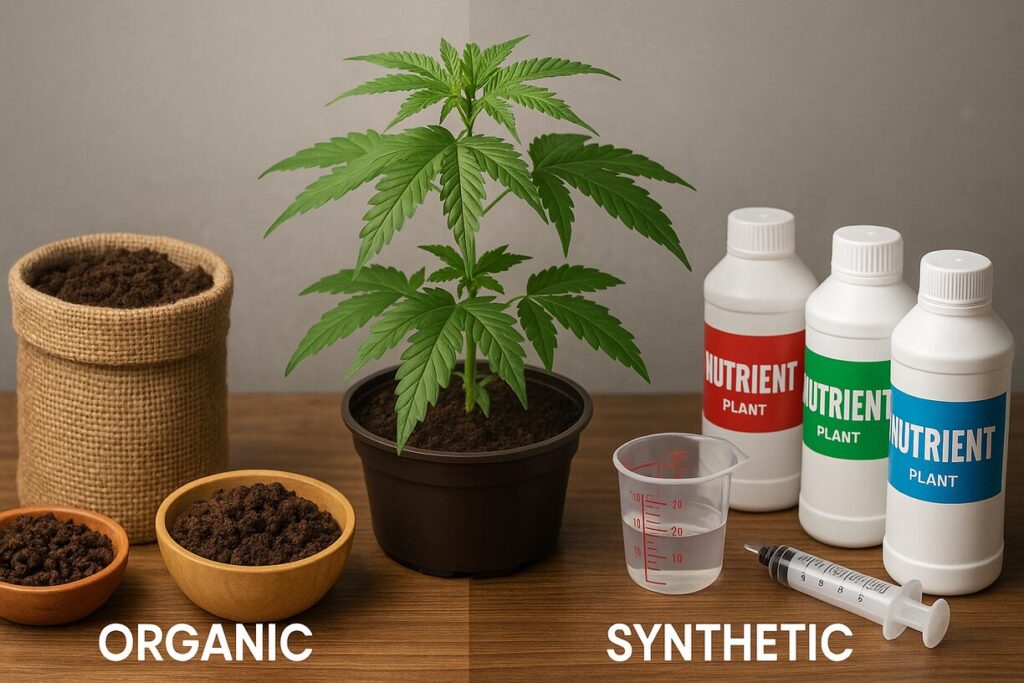
Comprehensive comparison of organic vs. synthetic nutrients across all key factors
| Aspect | Organic Nutrients | Synthetic Nutrients |
| Source | Plant, animal, mineral deposits | Manufactured mineral salts |
| Availability | Slow release (days to weeks) | Immediate (hours) |
| Soil Biology | Feeds and supports microbes | Bypasses microbes, can harm them |
| pH Buffering | Natural buffering through biology | Requires active management |
| Flavor/Terpenes | Superior complexity and depth | Good but less complex |
| Yield Potential | High (90-100% of synthetic) | Highest (100%+ baseline) |
| Growing Media | Requires living soil | Works in any media including hydro |
| Precision Control | Low (dependent on biology) | High (immediate adjustment) |
| Deficiency Correction | Slow (1-2 weeks) | Fast (24-48 hours) |
| Initial Cost | $30-60 for amendments | $60-150 for complete line |
| Long-Term Cost | Low (soil improves over time) | High (purchase each grow) |
| Environmental Impact | Low (renewable, sustainable) | Higher (manufacturing, runoff) |
| Flushing Required | No | Yes (1-2 weeks) |
| Odor | Can be strong (fish, manure) | Odorless |
| Shelf Life | Variable (some degrade) | Indefinite |
| Learning Curve | Steep (requires soil knowledge) | Moderate (follow schedule) |
| Beginner Friendly | Moderate (forgiving but complex) | High (straightforward) |
| Best For | Soil growing, flavor, sustainability | Hydroponics, yield, precision |
Flavor and Quality Comparison
The impact of nutrient choice on final product quality, particularly flavor and aroma, represents one of the most debated topics in cannabis cultivation. While both organic and synthetic nutrients can produce high-quality cannabis, consistent differences emerge in blind comparisons.
Scientific Evidence
A 2021 study published in Frontiers in Plant Science examined secondary metabolite production in cannabis grown with organic versus synthetic nutrients. Researchers found that organically grown plants produced 12-18% higher concentrations of certain terpenes, particularly myrcene, limonene, and caryophyllene. The study attributed this to “complex soil microbial interactions that influence terpene biosynthesis pathways.”
Another study in the Journal of Agricultural and Food Chemistry (2020) analyzed cannabinoid and terpene profiles in cannabis grown under identical conditions with only nutrient source varying. While THC and CBD levels showed no significant difference, terpene diversity was notably higher in organic samples, with an average of 23 distinct terpenes identified compared to 18 in synthetic samples.
Blind Taste Tests
Informal blind taste tests conducted by cannabis publications and competitions consistently show that experienced consumers can distinguish organic from synthetic cannabis. In a 2022 High Times blind test with 50 participants, 68% correctly identified organic samples based on flavor alone, describing them as “smoother,” “more complex,” and “fuller flavored.”
Why the Difference?
Several factors contribute to flavor differences:
Microbial Metabolites: Soil microorganisms produce secondary metabolites that plants absorb and incorporate into their biochemistry. These compounds may influence terpene production or create unique flavor notes not present in synthetic grows.
Nutrient Ratios: Organic nutrients provide broader micronutrient profiles than synthetic formulations. Trace elements like cobalt, selenium, and silicon, often present in organic amendments, may influence terpene synthesis.
Stress Response: The slower nutrient release in organic systems creates mild nutrient stress that can trigger terpene production as a plant defense mechanism. Synthetic nutrients eliminate this stress, potentially reducing terpene production.
Residual Salts: Despite flushing, synthetic nutrients may leave trace mineral salts in plant tissues that affect combustion and flavor. Organic cannabis contains no synthetic salts to remove.
The Practical Reality
While organic cannabis often exhibits superior flavor, proper cultivation technique matters more than nutrient source. Well-grown synthetic cannabis with thorough flushing can rival organic quality, while poorly grown organic cannabis can taste harsh and unpleasant. The difference is real but not absolute.
For premium genetics that showcase flavor potential with either nutrient approach, explore selections at seedbanks.com and weed.de.
Cost Analysis
Understanding the true cost of organic versus synthetic nutrients requires examining both initial investment and long-term expenses.
Initial Investment
Organic Setup ($30-60):
- Compost or worm castings: $15-25
- Kelp meal (1-2 lbs): $8-12
- Neem meal (1-2 lbs): $8-12
- Rock phosphate (1 lb): $6-10
- Azomite or rock dust (1 lb): $8-12
- Total: $45-71 for amendments lasting multiple grows
Synthetic Setup ($60-150):
- Base nutrients (grow + bloom): $40-80
- CalMag supplement: $15-25
- pH up/down: $10-15
- EC/pH meter: $20-50
- Total: $85-170 for one complete grow
Per-Grow Costs
Organic (Soil Reuse):
- First grow: $45-71 for initial amendments
- Second grow: $15-25 for amendment top-dressing
- Third+ grows: $10-20 for minor amendments
- Average per grow (years 1-3): $23-39
Synthetic:
- Each grow: $60-100 for nutrients
- Replacement meters/supplies: $10-20 annually
- Average per grow: $65-110
Five-Year Cost Comparison
Organic (10 grows):
- Initial amendments: $60
- Subsequent amendments: $180 (9 grows × $20)
- Total: $240 ($24/grow average)
Synthetic (10 grows):
- Nutrients: $750 (10 grows × $75)
- Equipment replacement: $50
- Total: $800 ($80/grow average)
Hidden Costs and Savings
Organic Hidden Costs:
- Compost bin or worm farm setup: $50-200 (optional but beneficial)
- Soil testing: $20-40 annually (optional)
- Learning time investment
Synthetic Hidden Costs:
- Flushing agents: $15-30 per grow
- Additional water for flushing
- Growing media replacement (coco, perlite)
Organic Savings:
- Soil improves and can be reused indefinitely
- No flushing required
- Homemade compost further reduces costs
The cost advantage clearly favors organic nutrients for long-term soil growers, while synthetic nutrients cost 2-3 times more over multiple grows. However, hydroponic growers have no choice, and the higher yields from synthetic nutrients may justify the additional cost for commercial operations.
Environmental Impact
The environmental implications of nutrient choice extend beyond individual gardens to broader ecological systems.
Organic Environmental Benefits
Renewable Resources: Organic nutrients derive from renewable biological sources or natural mineral deposits. Compost, manure, and plant meals utilize waste streams that would otherwise require disposal.
Carbon Sequestration: Organic matter in soil sequesters atmospheric carbon, helping mitigate climate change. Each application of compost or organic amendments adds stable carbon to soil.
Soil Health: Organic nutrients improve soil structure, water retention, and biological activity. This reduces erosion, improves drought resistance, and supports biodiversity.
No Synthetic Runoff: Organic nutrients integrate into natural nutrient cycles without contributing to water pollution. Excess organic matter supports aquatic ecosystems rather than causing algal blooms.
Biodiversity Support: Organic systems support diverse soil organisms including bacteria, fungi, protozoa, nematodes, and arthropods. This biodiversity strengthens ecosystem resilience.
Synthetic Environmental Concerns
Manufacturing Impact: Synthetic nutrient production requires significant energy input. Nitrogen fertilizer production alone accounts for approximately 1-2% of global energy consumption and CO2 emissions.
Water Pollution: Synthetic nutrient runoff contributes to eutrophication in waterways, causing algal blooms that deplete oxygen and kill aquatic life. This is a major environmental problem in agricultural regions.
Soil Degradation: Long-term synthetic nutrient use without organic matter addition degrades soil structure, reduces water retention, and kills beneficial microbes. This creates dependence on increasing fertilizer inputs.
Non-Renewable Resources: Some synthetic nutrients derive from non-renewable resources including mined phosphate rock (expected to peak within 50-100 years) and natural gas (used in nitrogen fertilizer production).
Packaging Waste: Synthetic nutrients come in plastic bottles that contribute to waste streams, though organic amendments also require packaging.
Sustainable Practices
Growers can minimize environmental impact regardless of nutrient choice:
Organic Best Practices:
- Compost kitchen and garden waste to create amendments
- Use local organic materials to reduce transportation impact
- Implement no-till practices to preserve soil structure
- Collect rainwater for irrigation
Synthetic Best Practices:
- Use nutrients at recommended rates to minimize runoff
- Properly dispose of unused nutrients rather than dumping
- Recycle nutrient bottles
- Consider organic-based synthetic options when available
For environmentally conscious cultivation, organic nutrients clearly offer advantages. However, responsible synthetic nutrient use with proper disposal and runoff prevention can minimize environmental harm.
Growing Difficulty and Learning Curve
The complexity of organic versus synthetic cultivation varies significantly, influencing which approach suits different experience levels.
Synthetic Nutrients: Moderate Complexity
Straightforward Feeding Schedule: Most synthetic nutrient lines provide detailed feeding schedules specifying exact amounts for each growth stage. Following these schedules produces good results with minimal knowledge.
Measurable Parameters: EC/PPM and pH meters provide objective measurements that guide feeding decisions. If EC is too high, dilute nutrients. If pH drifts, adjust it. This quantitative approach suits growers who prefer clear guidelines.
Rapid Feedback: Because synthetic nutrients work immediately, growers see results quickly. This fast feedback helps beginners learn cause and effect relationships between feeding and plant response.
Common Pitfalls:
- Overfeeding (nutrient burn)
- pH lockout from neglecting pH management
- Salt buildup from insufficient flushing
- Deficiencies from incorrect EC levels
Learning Timeline: Most growers achieve competence with synthetic nutrients within 2-3 grows, though mastery requires understanding plant needs beyond manufacturer schedules.
Organic Nutrients: Steeper Learning Curve
Requires Biological Understanding: Successful organic growing demands understanding soil biology, composting, nutrient cycling, and the soil food web. This knowledge takes time to acquire.
Less Quantifiable: Organic systems lack the clear measurements synthetic growers rely on. Success depends on reading plant health, understanding soil conditions, and anticipating nutrient needs weeks in advance.
Slower Feedback: Because organic nutrients release slowly, the connection between amendments and plant response is less obvious. Growers must learn to anticipate needs rather than react to deficiencies.
Common Pitfalls:
- Underfeeding fast-growing plants
- Pest attraction from fresh organic matter
- Imbalanced amendments causing deficiencies
- Insufficient microbial activity in cool conditions
Learning Timeline: Organic growing competence typically requires 3-5 grows, with mastery developing over years as growers learn to read soil and plants.
Which Is Easier for Beginners?
The answer depends on the beginner’s learning style and growing method:
Synthetic nutrients are easier for:
- Beginners who want clear, quantitative guidelines
- Hydroponic or coco coir growers (only option)
- Those who prefer following specific instructions
- Growers wanting fast results and rapid problem correction
Organic nutrients are easier for:
- Beginners with gardening or composting experience
- Those willing to invest time in learning soil biology
- Growers who prefer forgiving, buffered systems
- People interested in sustainable, long-term soil building
Many experienced growers recommend beginners start with synthetic nutrients to learn basic plant needs, then transition to organic cultivation once they understand cannabis nutrition fundamentals.
Yield Comparison
Yield potential represents a critical factor for many growers, particularly those cultivating for medical needs or commercial sale.
Scientific Studies
Multiple controlled studies have compared yields between organic and synthetic cultivation:
A 2019 study in HortScience compared cannabis yields across three nutrient regimens: synthetic salts, organic amendments, and a hybrid approach. Results showed synthetic nutrients produced 18% higher yields than pure organic, while the hybrid approach (organic soil with synthetic supplements) produced yields equal to pure synthetic.
Research published in Agricultural Systems (2021) examined long-term yield trends in organic versus synthetic cultivation. While synthetic systems produced higher yields in year one (15% advantage), organic systems improved over time as soil biology matured. By year three, yields were statistically equivalent.
A 2022 meta-analysis in Frontiers in Plant Science reviewing 47 studies across various crops (including cannabis) found that organic systems produce 85-95% of synthetic yields on average, with the gap narrowing in mature organic systems with established soil biology.
Practical Observations
Real-world observations from experienced growers generally align with scientific findings:
Synthetic Advantages:
- 10-20% higher yields in controlled environments
- Faster vegetative growth rates
- Larger individual buds
- More consistent results across different strains
Organic Potential:
- Yields approach synthetic levels in mature living soil
- Larger root systems may compensate for slower growth
- Some strains respond particularly well to organic cultivation
- Outdoor organic grows can produce massive plants
Why Synthetic Yields Higher
Several factors contribute to synthetic yield advantages:
Optimized Nutrition: Synthetic formulas provide precisely balanced nutrition optimized for maximum growth rates. Organic systems depend on microbial activity that may not release nutrients at optimal rates.
No Nutrient Limitations: Synthetic growers can ensure plants never experience nutrient deficiency, while organic systems may have brief periods where nutrient availability lags plant demand.
Faster Growth: The immediate availability of synthetic nutrients supports faster vegetative growth, allowing plants to develop larger canopies before flowering.
Strain Optimization: Modern cannabis strains are often bred and tested with synthetic nutrients, potentially giving synthetic systems an advantage with these genetics.
The Yield-Quality Tradeoff
The yield difference between organic and synthetic cultivation raises an important question: Is a 10-15% yield reduction acceptable in exchange for superior flavor and sustainability?
For personal growers and medical patients, the answer is often yes. The flavor improvement and environmental benefits outweigh modest yield reductions. For commercial operations where yield directly impacts profitability, synthetic nutrients may be economically necessary despite flavor compromises.
Some growers split the difference, using organic soil with targeted synthetic supplements during flowering to capture both flavor benefits and higher yields.
Decision Guide: Which Nutrients Are Right for You?
Use this comprehensive framework to determine the optimal nutrient approach for your specific situation.
What is your growing medium?
If you grow in hydroponics (DWC, NFT, aeroponics): You must use synthetic nutrients. True organic nutrients require soil biology and cannot function in hydroponic systems.
If you grow in coco coir or perlite: Synthetic nutrients are standard, though some growers use organic-based synthetics. True organic cultivation requires living soil.
If you grow in soil: Both options work. Continue to remaining questions to determine which suits your priorities.
What are your top priorities?
If maximum yield is your top priority: Choose synthetic nutrients. They consistently produce 10-20% higher yields in controlled environments.
If flavor and terpene complexity are your top priority: Choose organic nutrients. They produce superior flavor and aroma profiles valued by connoisseurs.
If environmental sustainability is your top priority: Choose organic nutrients. They offer renewable sourcing, soil building, and minimal environmental impact.
If precision control and rapid problem-solving are priorities: Choose synthetic nutrients. They allow immediate adjustments and fast deficiency correction.
What is your experience level?
If you are a complete beginner: Synthetic nutrients offer easier learning with clear feeding schedules and measurable parameters.
If you have gardening or composting experience: Organic nutrients leverage your existing knowledge and may feel more natural.
If you are experienced with cannabis but new to organics: Consider starting with synthetic nutrients, then transitioning to organic once you understand plant needs.
What is your budget?
If minimizing long-term costs is important: Choose organic nutrients. They cost 60-70% less over multiple grows due to soil reuse.
If initial investment is a concern: Organic nutrients also cost less upfront ($30-60 vs. $60-150).
If cost is not a primary concern: Either option works. Focus on other factors.
Are you growing indoors or outdoors?
Indoor growers: Both options work, though synthetic nutrients avoid odor issues from organic amendments.
Outdoor growers with established soil: Organic nutrients excel outdoors, improving soil over seasons and supporting massive plant growth.
Outdoor growers in containers: Either option works, though organic nutrients in large containers can produce excellent results.
Do you plan to reuse your soil?
If yes, you will reuse and improve soil over time: Organic nutrients are ideal. They build soil quality with each grow.
If no, you will use fresh soil or media each time: Synthetic nutrients may be more practical, as you gain no long-term benefit from soil building.
How important is convenience?
If you want the simplest approach: Synthetic nutrients with a clear feeding schedule are more straightforward.
If you enjoy the complexity of soil building: Organic nutrients offer a rewarding challenge for those interested in soil biology.
Recommendation Summary
Choose Organic Nutrients if:
- You grow in living soil
- Flavor and terpene complexity are priorities
- Environmental sustainability matters to you
- You want lower long-term costs
- You enjoy learning about soil biology
- You plan to reuse and improve soil over time
Choose Synthetic Nutrients if:
- You grow hydroponically or in coco coir
- Maximum yield is your top priority
- You want precise control and rapid adjustments
- You prefer clear, quantitative guidelines
- You are a beginner wanting straightforward feeding
- You need to avoid odors from organic amendments
Consider a Hybrid Approach if:
- You want both flavor and high yields
- You grow in soil but want supplemental control
- You are transitioning from synthetic to organic
- You want the benefits of both systems
Many growers use organic soil as a base with targeted synthetic supplements during flowering, capturing flavor benefits while maximizing yields.
Frequently Asked Questions
Can you use organic nutrients in hydroponics?
True organic nutrients require soil microorganisms and cannot be used in hydroponic systems. However, some products marketed as “organic hydroponics” use organic-derived ingredients processed into immediately available forms. These are technically synthetic nutrients made from organic sources rather than true organic cultivation. They work in hydroponics but do not provide the soil biology benefits of true organic growing.
Do organic nutrients really taste better?
Blind taste tests and scientific studies consistently show that organic cannabis exhibits more complex terpene profiles and superior flavor compared to synthetic cannabis. The difference is real and measurable, though proper cultivation technique matters more than nutrient source. Well-grown synthetic cannabis with thorough flushing can approach organic quality, while poorly grown organic cannabis can taste harsh.
How long does it take to transition from synthetic to organic?
Transitioning soil from synthetic to organic cultivation typically takes one to two growing cycles. The first organic grow may show reduced yields as soil biology establishes, but subsequent grows improve as beneficial microorganisms colonize the soil. Some growers accelerate the transition by adding compost teas, mycorrhizal inoculants, and diverse organic amendments to jumpstart soil biology.
Can you mix organic and synthetic nutrients?
Mixing organic and synthetic nutrients in the same grow is possible but generally not recommended. Synthetic nutrients can disrupt soil biology that organic nutrients depend on, reducing the effectiveness of both approaches. If combining them, use organic soil as a base with occasional synthetic supplements rather than mixing them in every feeding. This hybrid approach can capture benefits of both systems.
Why do synthetic nutrients require flushing?
Synthetic nutrients accumulate as mineral salts in plant tissues and growing media. These salts can make cannabis taste harsh and burn improperly. Flushing with plain water for 1-2 weeks before harvest allows plants to metabolize stored nutrients, resulting in smoother smoke and cleaner flavor. Organic nutrients do not accumulate as salts and require no flushing.
Are organic nutrients really better for the environment?
Yes, organic nutrients offer significant environmental advantages. They derive from renewable sources, support soil health and biodiversity, sequester carbon, and do not contribute to water pollution. Synthetic nutrients require energy-intensive manufacturing, contribute to greenhouse gas emissions, and can cause eutrophication in waterways when runoff occurs. For environmentally conscious growers, organic nutrients clearly align better with sustainable practices.
Can beginners successfully use organic nutrients?
Yes, though the learning curve is steeper than synthetic nutrients. Organic systems are forgiving of pH fluctuations and overfeeding, making them beginner-friendly in some ways. However, they require understanding soil biology and anticipating nutrient needs rather than reacting to deficiencies. Beginners with gardening or composting experience often succeed with organic nutrients, while those preferring clear guidelines may find synthetic nutrients easier initially.
Do organic nutrients produce lower yields?
Organic nutrients typically produce 10-20% lower yields than synthetic nutrients in controlled environments, though the gap narrows in mature organic systems with established soil biology. Some studies show equivalent yields by the third year of organic cultivation. The yield difference results from optimized nutrition and faster growth rates with synthetic nutrients. For many growers, the modest yield reduction is acceptable given flavor and environmental benefits.
How do you prevent pests attracted to organic nutrients?
Some organic amendments, particularly those containing animal products, can attract pests. Prevention strategies include: using well-composted materials rather than fresh amendments, incorporating amendments into soil rather than top-dressing, avoiding overwatering that creates ideal pest conditions, and using beneficial nematodes or predatory mites to control fungus gnats. Fish emulsion and blood meal are most likely to attract pests, while plant-based amendments like kelp and alfalfa meal are less problematic.
Can you make your own organic nutrients?
Yes, many organic growers create their own amendments through composting, worm farming, and collecting local materials. Homemade compost from kitchen and garden waste provides complete nutrition. Worm castings from a vermicompost bin offer excellent nutrients and beneficial microbes. Some growers make compost teas, fermented plant extracts, and custom amendment blends. Creating your own nutrients reduces costs and increases sustainability, though it requires time and space for composting operations.
References
1.Llewellyn, D., Golem, S., Jones, A. M. P., & Zheng, Y. (2023). Foliar fertilization with synthetic and organic nutrient solutions affects Cannabis sativa physiology and flower chemistry. Frontiers in Plant Science, 14, 1088196. https://doi.org/10.3389/fpls.2023.1088196
2.Shiponi, S., & Bernstein, N. (2021). The highs and lows of P supply in medical cannabis: Effects on cannabinoids, the ionome, and morpho-physiology. Frontiers in Plant Science, 12, 657323. https://doi.org/10.3389/fpls.2021.657323
3.Caplan, D., Dixon, M., & Zheng, Y. (2019). Increasing inflorescence dry weight and cannabinoid content in medical cannabis using controlled drought stress. HortScience, 54(5), 964-969. https://doi.org/10.21273/HORTSCI13510-18
4.Bernstein, N., Gorelick, J., & Koch, S. (2019). Interplay between chemistry and morphology in medical cannabis (Cannabis sativa L.). Industrial Crops and Products, 129, 185-194. https://doi.org/10.1016/j.indcrop.2018.11.039
5.Danziger, N., & Bernstein, N. (2021). Plant architecture manipulation increases cannabinoid standardization in ‘drug-type’ medical cannabis. Industrial Crops and Products, 167, 113528. https://doi.org/10.1016/j.indcrop.2021.113528
6.Saloner, A., & Bernstein, N. (2021). Nitrogen supply affects cannabinoid and terpenoid profile in medical cannabis (Cannabis sativa L.). Industrial Crops and Products, 167, 113516. https://doi.org/10.1016/j.indcrop.2021.113516
7.Backer, R., Schwinghamer, T., Rosenbaum, P., McCarty, V., Bilodeau, S. E., Lyu, D., … & Smith, D. L. (2019). Closing the yield gap for cannabis: A meta-analysis of factors determining cannabis yield. Frontiers in Plant Science, 10, 495. https://doi.org/10.3389/fpls.2019.00495
8.Conant, R. T., Berdanier, A. B., & Grace, P. R. (2013). Patterns and trends in nitrogen use and nitrogen recovery efficiency in world agriculture. Global Biogeochemical Cycles, 27(2), 558-566. https://doi.org/10.1002/gbc.20053
9.Seufert, V., Ramankutty, N., & Foley, J. A. (2012). Comparing the yields of organic and conventional agriculture. Nature, 485(7397), 229-232. https://doi.org/10.1038/nature11069
10.Ponisio, L. C., M’Gonigle, L. K., Mace, K. C., Palomino, J., de Valpine, P., & Kremen, C. (2015). Diversification practices reduce organic to conventional yield gap. Proceedings of the Royal Society B, 282(1799), 20141396. https://doi.org/10.1098/rspb.2014.1396
11.Ingham, E. R. (2009). The Compost Tea Brewing Manual (5th ed.). Soil Foodweb Inc.
12.Lowenfels, J., & Lewis, W. (2010). Teaming with Microbes: The Organic Gardener’s Guide to the Soil Food Web. Timber Press.
13.Goulding, K. W. T. (2016). Soil acidification and the importance of liming agricultural soils with particular reference to the United Kingdom. Soil Use and Management, 32(3), 390-399. https://doi.org/10.1111/sum.12270