
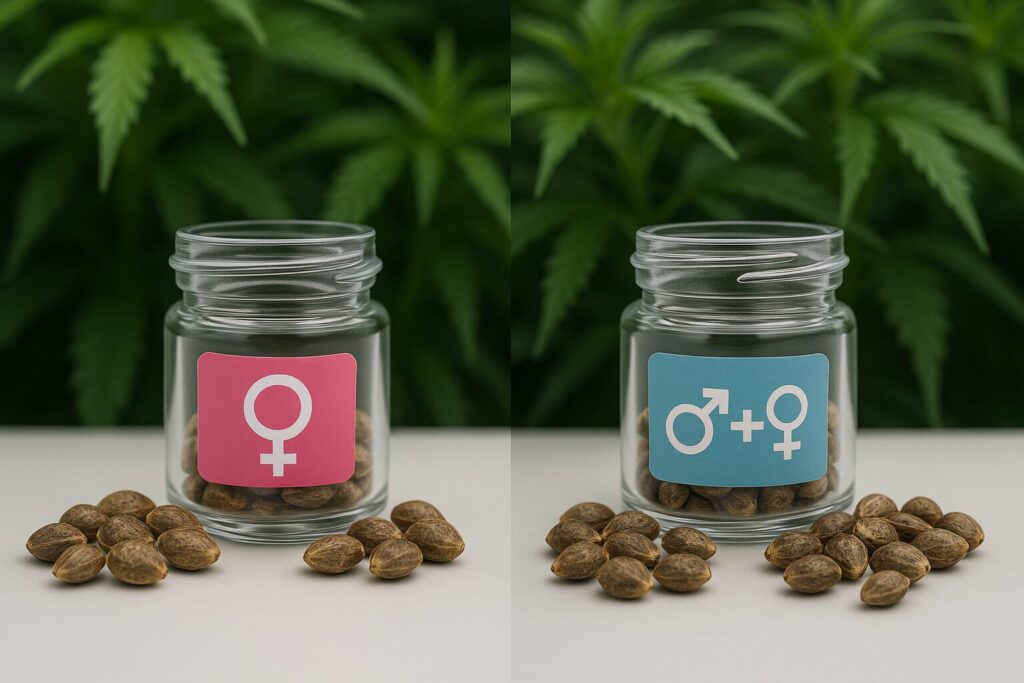
Feminized seeds vs regular seeds
Table of Contents
Key Takeaways
- Feminized Seeds Deliver Simplicity: Feminized seeds produce 99%+ female plants, eliminating the need to identify and remove males. This guarantees that every plant produces harvestable buds, making feminized seeds ideal for growers focused on flower production rather than breeding.
- Regular Seeds Enable Breeding: Regular seeds produce approximately 50% male and 50% female plants, providing the genetic diversity necessary for breeding programs. Breeders require both sexes to create new strains, preserve genetics, and develop unique cannabinoid and terpene profiles.
- Cost Considerations Vary by Goal: While feminized seeds cost more initially ($10-15 per seed vs. $5-8 for regulars), they eliminate wasted resources on male plants. Regular seeds offer better value for breeding operations where males serve essential purposes rather than representing wasted investment.
- Genetic Stability Differs: Regular seeds from stable breeding lines often exhibit more consistent genetics across generations. Feminized seeds, produced through stress-induced hermaphroditism or colloidal silver treatment, may carry slightly higher hermaphrodite risk if not produced by reputable breeders using proper techniques.
- Experience Level Matters: Beginners benefit from feminized seeds’ simplicity, avoiding the challenge of sexing plants and the disappointment of discovering half the garden produces no usable flowers. Experienced growers and breeders appreciate regular seeds’ genetic diversity and breeding potential.
- Legal Plant Counts Influence Choice: In jurisdictions with plant count limits, feminized seeds maximize productive plant numbers. Growing 6 regular seeds might yield only 3 females, while 6 feminized seeds provide 6 flower-producing plants, significantly impacting final harvest within legal constraints.
Introduction
Choosing between feminized and regular cannabis seeds represents one of the most fundamental decisions facing cannabis cultivators. This choice impacts everything from garden planning and resource allocation to breeding potential and final harvest yields. Understanding the biological mechanisms behind seed feminization, the advantages and limitations of each seed type, and how these factors align with specific growing goals enables informed decision-making that optimizes cultivation success.
Cannabis naturally produces male and female plants on separate individuals (dioecious), with females producing the resin-rich flowers sought by most growers. Regular seeds follow this natural pattern, producing approximately equal numbers of males and females. Feminized seeds, created through specialized breeding techniques, produce almost exclusively female plants by eliminating the Y chromosome from the genetic equation. This fundamental difference cascades through every aspect of cultivation, from initial seed purchase through final harvest.
This comprehensive guide examines feminized and regular seeds from multiple perspectives, analyzing genetics, breeding methodology, practical cultivation considerations, cost implications, and suitability for different growing scenarios. Whether you’re a first-time grower seeking maximum simplicity or an experienced breeder developing new genetics, understanding these seed types’ distinct characteristics helps align seed selection with cultivation objectives.
Understanding Cannabis Seed Types (Feminized seeds vs regular seeds )
Cannabis seeds contain the complete genetic blueprint for plant development, but not all seeds express these genetics identically. The distinction between feminized and regular seeds centers on sex chromosome inheritance and expression. Cannabis plants typically carry either XX (female) or XY (male) sex chromosomes, with regular seeds containing either combination and feminized seeds engineered to carry only XX chromosomes.
The Science of Plant Sex Determination
Cannabis sex determination follows chromosomal patterns similar to mammals, with females carrying two X chromosomes and males carrying one X and one Y chromosome. During sexual reproduction, male plants contribute either an X or Y chromosome, while females contribute an X chromosome, resulting in approximately 50/50 male/female offspring ratios in regular seed populations. This natural mechanism ensures genetic diversity and species survival in wild populations.
Environmental factors can influence sex expression even in genetically determined plants. Stress conditions including nutrient deficiency, light schedule disruptions, temperature extremes, and physical damage can trigger hermaphroditism, where plants develop both male and female flowers. This survival mechanism allows stressed plants to self-pollinate and produce seeds, though resulting genetics may carry increased hermaphrodite tendencies. Understanding these mechanisms helps growers recognize why seed quality and breeding practices significantly impact final plant performance [1].
Feminization Techniques
Feminized seed production employs techniques that induce female plants to produce pollen containing only X chromosomes. Two primary methods achieve this: stress-induced hermaphroditism and chemical sex reversal. The stress method subjects female plants to environmental extremes, triggering male flower development. However, this approach risks selecting for hermaphrodite-prone genetics, potentially passing instability to offspring.
Modern feminization primarily uses colloidal silver or silver thiosulfate solutions applied to female plants during early flowering. These silver compounds inhibit ethylene production, a hormone crucial for female flower development, causing treated plants to develop male flowers instead. Crucially, these chemically-induced male flowers still carry only X chromosomes, as the plant’s underlying genetics remain XX. Pollen from these flowers fertilizes untreated female plants, producing seeds with only XX chromosome combinations [2].
Reputable breeders select genetically stable mother plants showing no hermaphrodite tendencies across multiple generations before feminization. This careful selection minimizes hermaphrodite risk in feminized offspring. Poor breeding practices, conversely, can produce feminized seeds with elevated hermaphrodite rates, emphasizing the importance of purchasing from established, reputable seed banks like Official Cannabis Seeds, weed.de, or trusted genetics sources like Blue Dream and Sour Diesel.
Feminized Seeds: Complete Analysis
Feminized seeds revolutionized cannabis cultivation by eliminating the primary challenge facing flower-focused growers: male plants. Before feminization techniques became widespread, growers planted twice as many seeds as desired final plant count, expecting approximately half to be males requiring removal. Feminized seeds changed this equation entirely, allowing precise garden planning with confidence that virtually every seed produces a flower-bearing female plant.
How Feminized Seeds Work
Feminized seeds contain only XX sex chromosomes, lacking the Y chromosome that produces male plants. When germinated, these seeds develop into plants with female reproductive anatomy, producing the resinous flowers containing high cannabinoid and terpene concentrations. The absence of Y chromosomes means feminized seed populations produce 99%+ female plants under normal growing conditions, with occasional hermaphrodites representing the only exception.
This near-perfect female rate transforms cultivation logistics. Growers can plant exactly the number of seeds matching their desired final plant count, eliminating wasted resources on male plants. This efficiency proves particularly valuable in indoor growing operations where space, lighting, and nutrients represent significant investments. Every plant receiving these resources contributes to final harvest rather than half the garden producing no usable flowers.
Advantages of Feminized Seeds
Guaranteed Female Plants: The primary advantage of feminized seeds is the virtual guarantee of female plants. This eliminates the need to learn plant sexing, monitor plants for male flowers during early flowering, and remove males before pollen release. For beginners, this simplification removes a major cultivation hurdle and prevents the disappointment of discovering half the garden produces no harvestable buds.
Maximized Space Efficiency: In gardens with limited space or legal plant count restrictions, feminized seeds maximize productive plant numbers. A grower limited to 6 plants can confidently plant 6 feminized seeds, knowing all 6 will produce flowers. With regular seeds, that same grower might achieve only 3 female plants, significantly reducing final harvest within legal constraints [3].
Resource Optimization: Every seed planted represents investment in growing medium, nutrients, water, electricity, and time. Feminized seeds ensure these resources support flower-producing plants rather than males destined for removal. This efficiency extends beyond direct costs to include opportunity costs—the potential harvest lost when garden space supports male plants instead of additional females.
Simplified Garden Management: Feminized seeds eliminate the need to segregate plants during early flowering while monitoring for sex expression. Growers can maintain all plants in a single space without risk of accidental pollination. This simplification proves especially valuable in Sea of Green (SOG) operations where numerous small plants fill growing space, making individual plant inspection and removal logistically challenging.
Consistent Genetics: High-quality feminized seeds from reputable breeders exhibit excellent genetic consistency, with plants showing uniform growth patterns, flowering times, and cannabinoid profiles. This consistency aids garden planning and allows growers to optimize cultivation techniques for specific strains. Popular feminized genetics from sources like Blue Dream or Sour Diesel demonstrate remarkable uniformity across multiple grows.
Ideal for Personal Use: Home growers focused on personal consumption rather than breeding benefit enormously from feminized seeds. These growers seek maximum flower production from limited plant counts, making the guaranteed female rate invaluable. Feminized seeds align perfectly with personal cultivation goals, delivering reliable results without breeding program complications.
Disadvantages of Feminized Seeds
Higher Initial Cost: Feminized seeds typically cost $10-15 per seed compared to $5-8 for regular seeds. This price premium reflects the additional breeding work required for feminization. For large-scale operations planting hundreds or thousands of seeds, this cost difference becomes substantial, though it may be offset by eliminated male plant waste.
Limited Breeding Potential: Feminized seeds produce only female plants, eliminating the male plants necessary for traditional breeding. Growers cannot create new strains, preserve genetics through seed production, or develop unique phenotypes without male plants. While advanced techniques like feminized-to-feminized breeding exist, they require specialized knowledge and equipment beyond most home growers’ capabilities.
Potential Hermaphrodite Risk: Feminized seeds from poor breeding practices may exhibit elevated hermaphrodite rates compared to quality regular seeds. Stress conditions can trigger hermaphroditism in any cannabis plant, but genetics play a significant role in susceptibility. Reputable breeders minimize this risk through careful parent selection, but budget feminized seeds from unknown sources may carry higher hermaphrodite potential [4].
No Mother Plant Preservation: Breeders and commercial operations often maintain mother plants—female plants kept in vegetative state indefinitely for cloning. While feminized seeds produce excellent mother plants, growers cannot preserve genetics through seed production without males. This limitation means replacing mother plants requires purchasing new seeds rather than producing them in-house.
Reduced Genetic Diversity: Breeding programs require genetic diversity for trait selection and improvement. Feminized seed populations lack the genetic variation present in regular seed populations containing both sexes. This limitation doesn’t affect most home growers but impacts breeders seeking to develop new strains or improve existing genetics.
Regular Seeds: Complete Analysis
Regular cannabis seeds represent the natural, unmodified form of cannabis reproduction. These seeds result from traditional breeding where male plants pollinate female plants, producing offspring with standard XX (female) or XY (male) sex chromosome combinations. Regular seeds have sustained cannabis genetics for millennia, enabling the genetic diversity that produced today’s vast strain variety.
How Regular Seeds Work
Regular seeds contain either XX or XY sex chromosome combinations in approximately equal proportions. When germinated, roughly half develop into male plants and half into female plants, following natural dioecious reproduction patterns. This 50/50 ratio means growers must plant twice as many regular seeds as desired female plant count, then identify and remove males during early flowering before pollen release.
Male plant identification requires monitoring plants as they transition from vegetative to flowering stages. Males develop pollen sacs rather than pistil-bearing calyxes, typically showing sex 1-2 weeks before females. Experienced growers recognize these differences easily, but beginners may struggle with identification, risking accidental pollination if males aren’t removed promptly. Resources like seedbanks.com guides provide detailed sexing tutorials for new growers.
Advantages of Regular Seeds
Essential for Breeding: Regular seeds provide the male and female plants necessary for traditional breeding programs. Breeders cross selected males and females to combine desirable traits, develop new strains, and preserve genetics through seed production. Without regular seeds, the cannabis genetic diversity enabling today’s specialized strains wouldn’t exist. Breeding operations require regular seeds’ genetic variation and male plants [5].
Lower Initial Cost: Regular seeds cost $5-8 per seed compared to $10-15 for feminized seeds, offering significant savings for large-scale operations. While half the plants are males, the lower seed cost partially offsets this waste. For breeding operations where males serve essential purposes, regular seeds provide far better value than feminized alternatives.
Superior Genetic Stability: Regular seeds from established breeding lines often exhibit more consistent genetics across generations compared to feminized seeds. Natural reproduction without feminization techniques maintains genetic integrity, potentially reducing hermaphrodite risk. Breeders seeking stable genetics for long-term breeding programs typically prefer regular seeds from proven lines.
Mother Plant Creation: Regular seeds produce excellent mother plants for cloning operations. Growers can identify superior female phenotypes, maintain them as mothers, and produce unlimited clones with identical genetics. Unlike feminized seeds where genetics can’t be preserved through seed production, regular seed mothers can be bred to produce new seed batches, enabling genetic preservation without ongoing seed purchases.
Phenotype Hunting: Breeders and connoisseurs engage in “phenotype hunting”—growing multiple plants from the same strain to identify exceptional individuals. Regular seeds provide larger genetic variation for phenotype hunting compared to feminized seeds, increasing odds of finding truly outstanding plants. Once identified, these phenotypes can be preserved through cloning or breeding.
Natural Genetics: Some growers prefer regular seeds’ “natural” genetics, viewing feminization as unnecessary human intervention. While this perspective is more philosophical than practical, it reflects preferences for traditional breeding methods and unmodified genetics. Regular seeds represent cannabis in its natural reproductive state, appealing to purists and traditional breeders.
Hardiness and Vigor: Anecdotal evidence suggests regular seeds sometimes produce more vigorous plants with greater stress resistance compared to feminized seeds. While scientific research on this topic remains limited, some experienced growers report regular seed plants showing superior resilience. This potential advantage may stem from genetic diversity or natural selection processes in regular breeding programs.
Disadvantages of Regular Seeds
50% Male Plants: The primary disadvantage of regular seeds is that approximately half produce male plants unsuitable for flower production. These males must be identified and removed, representing wasted resources including seeds, growing medium, nutrients, water, electricity, and time. For flower-focused growers, this waste significantly reduces garden efficiency.
Requires Plant Sexing: Growers must learn to identify plant sex and monitor gardens during early flowering to remove males before pollen release. This adds complexity and requires vigilance, as missing a male plant can result in garden-wide pollination, dramatically reducing flower quality and yield. Beginners often struggle with sexing, risking accidental pollination.
Space Inefficiency: Regular seeds require planting twice as many seeds as desired final female count. In space-limited gardens or jurisdictions with plant count restrictions, this inefficiency severely limits productive plant numbers. A grower limited to 6 plants must choose between planting 6 regular seeds (yielding approximately 3 females) or 6 feminized seeds (yielding 6 females)—a dramatic difference in final harvest potential.
Resource Waste: Every male plant consumes resources that could support additional female plants. In indoor growing operations where electricity costs are substantial, half the garden’s energy consumption supports plants producing no harvestable flowers. This waste extends to nutrients, growing medium, and grower time invested in plants ultimately removed.
Pollination Risk: Maintaining male plants in the same space as females risks accidental pollination. Even brief exposure to male pollen can seed entire female plants, dramatically reducing flower quality. Growers must either remove males promptly or maintain separate spaces for sexing, adding logistical complexity.
Inconsistent Garden Planning: The unpredictable male/female ratio in regular seed populations complicates garden planning. While averages approach 50/50, individual seed batches might produce 60% males or 60% females, making final female plant counts uncertain. This unpredictability challenges growers trying to optimize space utilization and resource allocation.
Side-by-Side Comparison
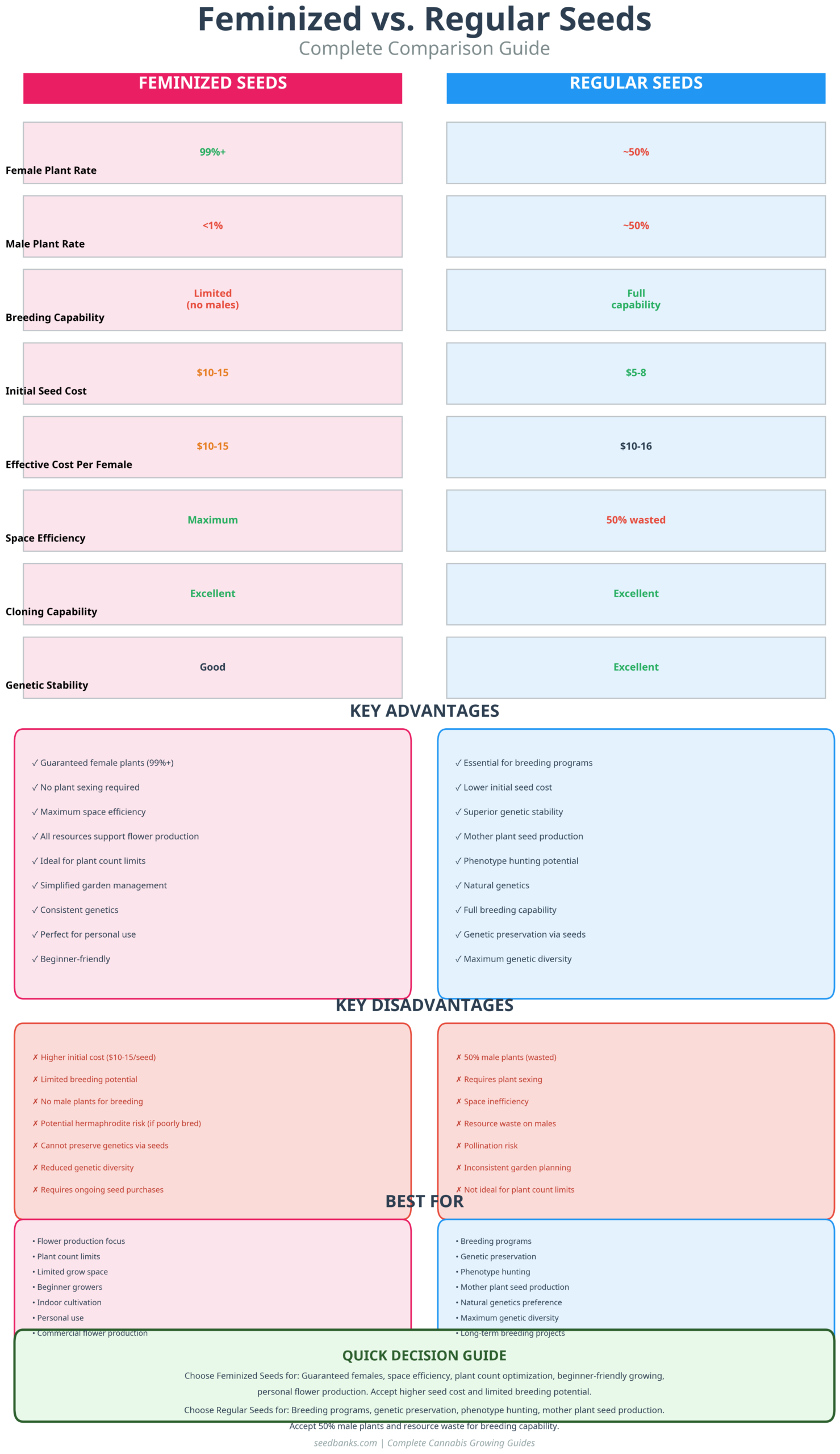
Comprehensive comparison of feminized and regular cannabis seeds
| Factor | Feminized Seeds | Regular Seeds |
| Female Plant Rate | 99%+ | ~50% |
| Male Plant Rate | <1% (rare hermaphrodites) | ~50% |
| Breeding Capability | Limited (no males) | Full capability |
| Initial Seed Cost | $10-15 per seed | $5-8 per seed |
| Effective Cost Per Female | $10-15 | $10-16 (accounting for males) |
| Space Efficiency | Maximum | 50% wasted on males |
| Resource Efficiency | High | 50% wasted on males |
| Genetic Stability | Good (from reputable breeders) | Excellent |
| Hermaphrodite Risk | Slightly higher (if poorly bred) | Lower |
| Cloning Capability | Excellent | Excellent |
| Mother Plant Suitability | Excellent (but can’t produce seeds) | Excellent (can produce seeds) |
| Phenotype Variation | Moderate | Higher |
| Legal Plant Count Optimization | Excellent | Poor |
| Beginner Friendliness | Excellent | Moderate |
| Breeding Program Suitability | Poor | Excellent |
| Commercial Flower Production | Excellent | Poor |
| Genetic Preservation | Cloning only | Cloning and seed production |
| Garden Planning Predictability | Excellent | Moderate |
Breeding and Genetics Considerations
Cannabis breeding requires both male and female plants, making regular seeds essential for breeding programs. Breeders select males and females exhibiting desirable traits—high cannabinoid content, specific terpene profiles, growth structure, disease resistance, or flowering time—then cross them to produce offspring combining these characteristics. This process requires multiple generations of selection and crossing to stabilize desired traits, demanding regular seeds’ genetic diversity.
Breeding with Regular Seeds
Traditional breeding programs start with regular seeds from established strains, growing out populations to identify exceptional phenotypes. Breeders evaluate males for vigor, structure, and resin production (males produce small amounts of resin on leaves and stems), selecting those most likely to pass desirable traits. Female selection focuses on flower quality, cannabinoid content, terpene profiles, yield, and growth characteristics.
Selected males pollinate chosen females, producing regular seeds for the next generation. Breeders grow out these F1 (first filial) offspring, selecting the best individuals for further breeding. This process continues through F2, F3, and subsequent generations until desired traits stabilize and breed true. Developing a stable new strain typically requires 6-8 generations, representing years of work and hundreds or thousands of plants [6].
Limitations of Feminized Seeds for Breeding
Feminized seeds’ lack of male plants eliminates traditional breeding possibilities. While advanced techniques like “selfing” (using chemically-reversed females to pollinate themselves or other females) can produce feminized seeds, these methods require specialized knowledge and equipment. Most home growers lack the resources for feminized breeding programs, making regular seeds the practical choice for breeding work.
Some breeders argue feminized-to-feminized breeding reduces genetic diversity and increases hermaphrodite risk over multiple generations. While high-quality feminized seeds from reputable sources show no such problems, the concern reflects breeding community preferences for regular seeds’ natural genetics and proven stability.
Cost Analysis: Initial vs. Long-Term
Comparing feminized and regular seed costs requires examining both initial seed prices and effective costs after accounting for male plants. While feminized seeds cost more per seed, regular seeds’ 50% male rate changes the value equation.
Initial Cost Comparison
- Feminized seeds: $10-15 per seed
- Regular seeds: $5-8 per seed
At first glance, regular seeds appear significantly cheaper. However, effective cost per female plant tells a different story.
Effective Cost Per Female Plant
Feminized seeds: $10-15 per female plant (99%+ female rate)
Regular seeds: $10-16 per female plant (50% female rate means buying 2 seeds per female)
When accounting for male plants, feminized and regular seeds show similar effective costs per female plant. The real cost difference emerges in wasted resources beyond seed prices.
Resource Waste Calculation
Consider a 6-plant indoor garden:
Feminized seeds:
- 6 seeds planted = 6 female plants
- Seed cost: $60-90
- All resources support flower production
Regular seeds:
- 12 seeds planted = ~6 female plants
- Seed cost: $60-96
- 50% of resources wasted on males
The resource waste with regular seeds includes:
- Growing medium for 6 male plants
- Nutrients for 6 male plants
- Water for 6 male plants
- Electricity for 6 male plants (significant in indoor grows)
- Time caring for 6 male plants
In indoor operations where electricity costs $50-100 per plant per cycle, regular seeds’ resource waste can exceed $300-600 per grow. This waste far outweighs any initial seed cost savings, making feminized seeds more economical for flower-focused growing.
Long-Term Considerations
Breeding operations: Regular seeds provide better long-term value for breeding programs where males serve essential purposes rather than representing waste.
Cloning operations: Both seed types produce excellent mother plants for cloning. However, regular seed mothers can be bred to produce new seed batches, while feminized mothers require ongoing seed purchases for genetic refreshment.
Commercial operations: Large-scale flower production benefits enormously from feminized seeds’ efficiency, with resource savings far exceeding seed cost premiums.
Legal and Practical Considerations
Legal plant count limits significantly impact seed type selection. Many jurisdictions allow home cultivation but restrict plant numbers—commonly 4, 6, or 12 plants depending on location. These limits make feminized seeds dramatically more valuable by maximizing productive plant counts.
Plant Count Optimization
Example: 6-plant limit
Feminized seeds:
- 6 plants = 6 females = 6 flower producers
- Potential yield: 600-1800g (assuming 100-300g per plant)
Regular seeds:
- 6 plants = ~3 females + ~3 males = 3 flower producers
- Potential yield: 300-900g (assuming 100-300g per plant)
This dramatic difference in legal plant count optimization makes feminized seeds essential for jurisdictions with restrictive limits. Growers cannot afford to waste half their legal plant count on males producing no usable flowers.
Practical Growing Considerations
Space limitations: Small grow spaces benefit from feminized seeds’ space efficiency. Every square foot supporting male plants represents lost flower production potential.
Stealth growing: Smaller plant counts attract less attention. Feminized seeds allow achieving desired yields with fewer total plants, supporting stealth growing objectives.
Time constraints: Busy growers appreciate feminized seeds’ simplified management, eliminating sexing requirements and male removal logistics.
Experience level: Beginners benefit from feminized seeds’ simplicity, avoiding the learning curve and potential mistakes associated with plant sexing.
Which Seed Type is Right for You?
Choosing between feminized and regular seeds depends on growing goals, experience level, legal constraints, and whether breeding interests factor into cultivation plans.
Choose Feminized Seeds If You:
- Focus on flower production rather than breeding
- Face plant count limits that restrict total plant numbers
- Grow in limited space where every plant must produce flowers
- Are a beginner seeking simplified cultivation
- Want predictable results with known female plant counts
- Grow indoors where resource efficiency matters
- Prefer convenience over breeding potential
Choose Regular Seeds If You:
- Plan to breed new strains or preserve genetics
- Want to create mother plants for seed production
- Engage in phenotype hunting seeking exceptional genetics
- Prefer natural genetics without feminization
- Run breeding programs requiring male plants
- Have unlimited plant counts where male waste doesn’t matter
- Seek maximum genetic diversity for selection programs
Hybrid Approach
Some growers use both seed types strategically:
- Feminized seeds for flower production gardens
- Regular seeds for breeding projects and mother plant creation
This approach maximizes each seed type’s strengths while minimizing limitations.
Frequently Asked Questions
Are feminized seeds genetically modified (GMO)?
No. Feminized seeds are not genetically modified organisms. Feminization uses natural plant hormones (ethylene inhibition) to induce male flower development in female plants, but doesn’t alter DNA. The resulting seeds contain only naturally occurring XX chromosome combinations.
Do feminized seeds produce hermaphrodites more often than regular seeds?
Quality feminized seeds from reputable breeders show hermaphrodite rates similar to regular seeds. However, poorly produced feminized seeds using stress-induced feminization may carry higher hermaphrodite risk. Purchasing from established seed banks like Official Cannabis Seeds or weed.de minimizes this concern.
Can I breed with feminized seeds?
Traditional breeding requires male plants, which feminized seeds don’t produce. Advanced techniques like chemical sex reversal allow feminized-to-feminized breeding, but require specialized knowledge and equipment beyond most home growers’ capabilities.
Why do regular seeds cost less than feminized seeds?
Regular seed production follows natural reproduction requiring only male and female plants. Feminized seed production requires additional steps including chemical treatments and careful breeding selection, increasing production costs reflected in higher seed prices.
How do I know if I received male or female plants from regular seeds?
Plants show sex during early flowering (transition from vegetative to flowering stage). Males develop pollen sacs while females develop pistil-bearing calyxes. Sex typically becomes apparent 1-2 weeks into flowering, with males usually showing first. Detailed sexing guides are available at seedbanks.com.
Can I save seeds from feminized plants?
Feminized plants can produce seeds if pollinated (by males or hermaphrodites), but without male plants, seed production requires hermaphroditism or chemical sex reversal. Seeds from hermaphrodite-pollinated feminized plants may carry elevated hermaphrodite risk.
Do feminized seeds produce less potent plants than regular seeds?
No. Feminization doesn’t affect cannabinoid production or potency. High-quality feminized seeds produce plants with identical potency to their regular seed counterparts, assuming identical genetics.
What happens if I plant 10 regular seeds?
Statistically, approximately 5 will be male and 5 will be female. However, individual batches may vary, producing anywhere from 3-7 females. This unpredictability complicates garden planning compared to feminized seeds’ consistent results.
Are regular seeds better for outdoor growing?
Regular seeds offer no inherent outdoor advantage over feminized seeds. However, outdoor growers with unlimited space may tolerate regular seeds’ male plant waste more easily than indoor growers with expensive grow space. Most outdoor growers still prefer feminized seeds’ efficiency.
Can I tell if a seed is feminized or regular by looking at it?
No. Feminized and regular seeds are visually identical. The only way to distinguish them is through labeling or by growing them out and observing sex expression during flowering.
Conclusion
Feminized and regular cannabis seeds serve different cultivation purposes, with neither universally superior to the other. Feminized seeds excel for flower-focused growing, offering guaranteed female plants, space efficiency, and simplified cultivation. Regular seeds remain essential for breeding programs, genetic preservation, and situations where male plants serve valuable purposes beyond flower production.
For most home growers focused on personal flower production, feminized seeds provide clear advantages. The guaranteed female rate, space efficiency, and simplified management outweigh the higher initial seed cost, especially in jurisdictions with plant count limits. Beginners particularly benefit from feminized seeds’ elimination of sexing requirements and male removal logistics.
Breeders, phenotype hunters, and growers interested in genetic preservation require regular seeds’ male plants and genetic diversity. These applications make regular seeds irreplaceable despite the inefficiency of 50% male plants. The cannabis industry’s genetic diversity depends on breeders working with regular seeds to develop new strains and preserve existing genetics.
Understanding both seed types’ characteristics, advantages, and limitations enables informed decisions aligned with specific growing goals. Whether choosing feminized seeds for efficient flower production or regular seeds for breeding projects, purchasing from reputable sources like Official Cannabis Seeds, weed.de, Blue Dream, or Sour Diesel ensures quality genetics that perform as expected.
For more cultivation information, explore our comprehensive growing guides, comparison articles, and equipment recommendations. Additional resources for experienced growers are available at Pre-Roll Joints.
References
[1] Punja, Z. K., & Holmes, J. E. (2020). Hermaphroditism in marijuana (Cannabis sativa L.) inflorescences – impact on floral morphology, seed formation, progeny sex ratios, and genetic variation. Frontiers in Plant Science, 11, 718. https://doi.org/10.3389/fpls.2020.00718
[2] Ram, H. Y. M., & Sett, R. (1982). Induction of fertile male flowers in genetically female Cannabis sativa plants by silver nitrate and silver thiosulphate anionic complex. Theoretical and Applied Genetics, 62(4), 369-375. https://doi.org/10.1007/BF00275107
[3] Small, E., & Antle, T. (2003). A preliminary study of pollen dispersal in Cannabis sativa in relation to wind direction. Journal of Industrial Hemp, 8(2), 37-50. https://doi.org/10.1300/J237v08n02_04
[4] Faux, A. M., & Bertin, P. (2014). Modelling approach for the quantitative variation of sex expression in monoecious hemp (Cannabis sativa L.). Plant Breeding, 133(6), 782-787. https://doi.org/10.1111/pbr.12208
[5] Clarke, R. C., & Merlin, M. D. (2016). Cannabis domestication, breeding history, present-day genetic diversity, and future prospects. Critical Reviews in Plant Sciences, 35(5-6), 293-327. https://doi.org/10.1080/07352689.2016.1267498
[6] Sawler, J., Stout, J. M., Gardner, K. M., Hudson, D., Vidmar, J., Butler, L., … & Myles, S. (2015). The genetic structure of marijuana and hemp. PLoS ONE, 10(8), e0133292. https://doi.org/10.1371/journal.pone.0133292