
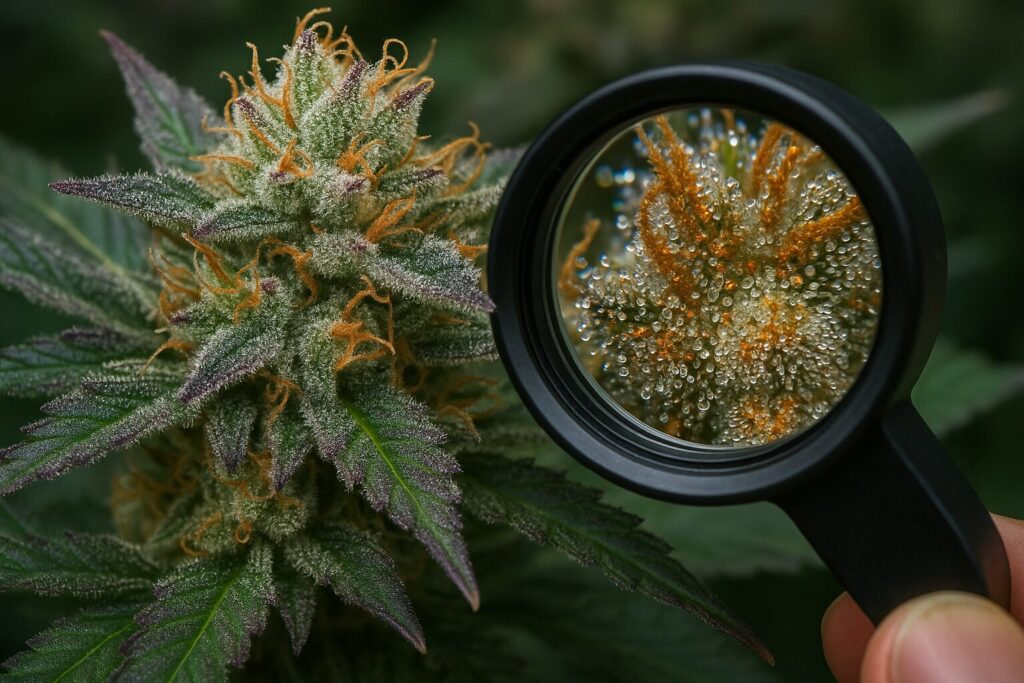
A close-up view of mature cannabis trichomes, the key to determining the optimal harvesting cannabis time.
Table of Contents
📂 Key Takeaways
- Harvest Timing is Everything: The key to a successful harvest is timing. Harvesting too early or too late can significantly impact the potency, flavor, and yield of your cannabis.
- Trichome Maturity is the #1 Indicator: The color of the trichomes (clear, milky, or amber) is the most accurate way to determine the optimal harvest time. A jeweler’s loupe or microscope is essential for this.
- Flushing is Crucial for Quality: Flushing your plants with plain pH-balanced water for 7-10 days before harvest is essential for removing excess nutrients and ensuring a smooth, clean smoke.
- Drying and Curing are Non-Negotiable: Proper drying and curing are just as important as the growing process itself. A slow and controlled dry, followed by a patient cure, will unlock the full flavor and potency of your cannabis.
- Patience is a Virtue: From the final weeks of flowering to the end of the curing process, patience is the most important tool in a grower’s arsenal. Rushing any of these steps will result in a lower-quality product.
🔍 1. Introduction: The Art and Science of Harvesting
After months of careful cultivation, the moment of harvest is the culmination of all your hard work and dedication. It is a time of great excitement, but it is also a critical juncture that can make or break the quality of your final product. The art and science of harvesting cannabis is a delicate dance of timing, technique, and patience. From the final flush to the slow cure, every step of the harvest process plays a crucial role in determining the potency, flavor, and overall quality of your cannabis.
Whether you’re growing from premium cannabis seeds from seedbanks.com or from clones, this guide will provide you with a comprehensive, science-backed approach to harvesting your cannabis plants. We will explore the science of ripening, the art of timing your harvest, and the step-by-step process of flushing, trimming, drying, and curing. Whether you are a first-time grower or a seasoned veteran, this guide will equip you with the knowledge and techniques you need to maximize the quality and yield of your harvest.
✅ 2. The Science of Ripening: What Happens in the Final Weeks?
In the final weeks of flowering, a complex series of biochemical changes takes place within the cannabis plant, transforming it from a vegetative organism into a resin-producing powerhouse. Understanding this process is key to timing your harvest for optimal potency and flavor.
Cannabinoid and Terpene Synthesis
During the flowering stage, the cannabis plant produces a wide array of chemical compounds, including cannabinoids, terpenes, and flavonoids. The most well-known of these are the cannabinoids, such as tetrahydrocannabinol (THC) and cannabidiol (CBD), which are responsible for the psychoactive and therapeutic effects of cannabis. Terpenes are aromatic compounds that give cannabis its distinct smell and flavor, and they also play a role in modulating the effects of the cannabinoids [1].
In the final weeks of flowering, the plant ramps up its production of these compounds, and the chemical profile of the plant can change dramatically. A 2023 study published in the Journal of Cannabis Research found that the concentration of cannabinoids and terpenes can vary significantly depending on the harvest time [2]. This is why timing your harvest is so crucial for achieving the desired effects and flavor profile.
The Role of Trichomes
The cannabinoids and terpenes are produced in the glandular trichomes, the small, mushroom-shaped glands that cover the buds and leaves of the cannabis plant. These trichomes are the resin factories of the plant, and their appearance is the most reliable indicator of the plant’s maturity.
As the plant matures, the trichomes go through a series of changes, from clear to milky white to amber. These changes correspond to the changing chemical profile of the plant, and they can be used to determine the optimal harvest time for your desired effects. A 2020 study in The Plant Journal detailed the morphological changes in trichomes during flower maturation, providing a scientific basis for this long-held cultivation practice [3].
🌱 3. Timing Your Harvest: The Key to Quality
Timing your harvest is arguably the most important decision you will make as a cannabis cultivator. Harvest too early, and you will sacrifice yield and potency. Harvest too late, and the THC will begin to degrade into cannabinol (CBN), resulting in a more sedative and less psychoactive high.
Reading the Trichomes: A Visual Guide
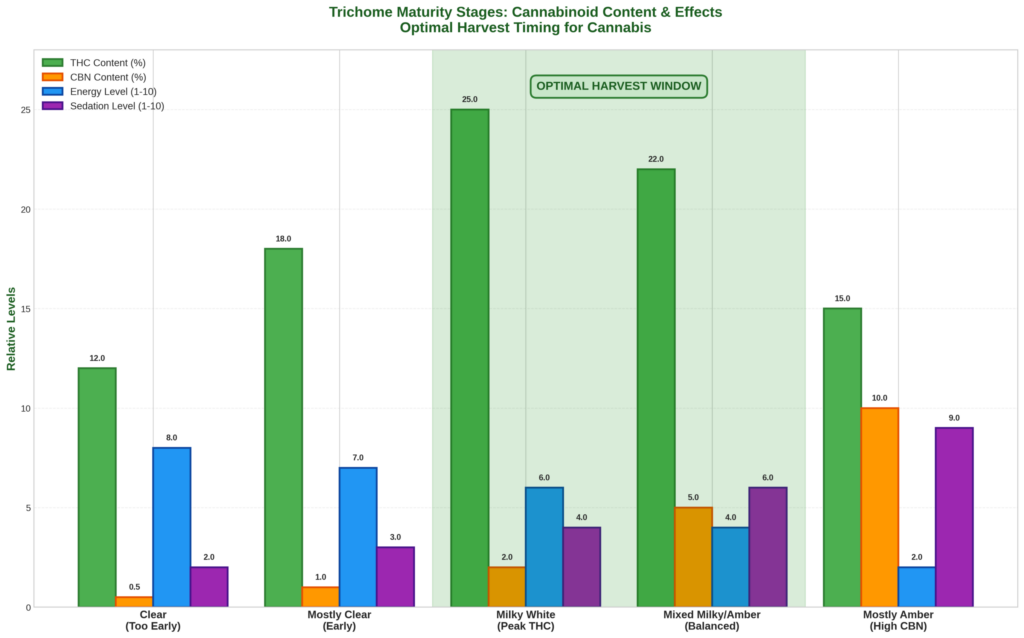
The most accurate way to determine the optimal harvest time is to inspect the trichomes with a jeweler’s loupe or a microscope. The color of the trichomes will tell you everything you need to know about the maturity of the plant and the chemical profile of the buds.
| Trichome Color | Plant Maturity | Effects |
| Clear | Immature | Low potency, racy and anxious high. |
| Milky White | Peak Maturity | Highest THC content, energetic and euphoric high. |
| Amber | Over-Mature | THC is degrading into CBN, sedative and relaxing high. |
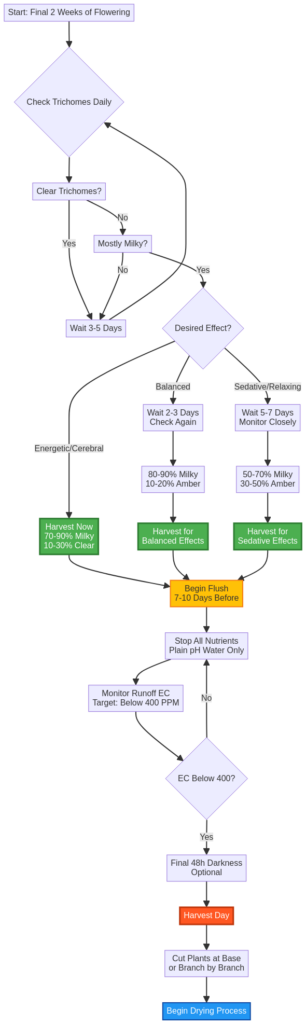
For the most potent and psychoactive high, it is generally recommended to harvest when the trichomes are mostly milky white with a small percentage of amber (around 10-20%). For a more relaxing and sedative high, you can wait until the trichomes are a more even mix of milky white and amber (around 50/50).
Other Harvest Indicators: Pistils and Leaf Color
While trichome color is the most accurate indicator of harvest time, there are other visual cues that can help you determine when your plants are ready. The pistils, the small hair-like structures that cover the buds, will begin to change color from white to orange, red, or brown as the plant matures. When 70-90% of the pistils have changed color, the plant is generally ready to be harvested.
The color of the fan leaves can also be an indicator of maturity. As the plant nears the end of its life cycle, the fan leaves will begin to yellow and die off as the plant focuses its energy on bud production. This is a natural process and is a good sign that the plant is nearing maturity.
🌱 4. Pre-Harvest Preparations: Setting the Stage for Success
In the final weeks before harvest, there are a few important steps you can take to ensure a high-quality final product. These pre-harvest preparations will help to improve the flavor, smoothness, and overall quality of your cannabis.
The Flushing Process: Why and How
Flushing is the process of feeding your plants plain pH-balanced water for 7-10 days before harvest. This helps to remove any excess nutrients from the soil and the plant, which can result in a harsh and unpleasant smoke. By flushing your plants, you are forcing them to use up their stored nutrients, which results in a cleaner and smoother final product.
To flush your plants, simply water them with plain pH-balanced water every time they are thirsty. You should water until you see about 20% runoff from the bottom of the pot. This will help to wash away any excess salts and nutrients from the soil. During the flushing process, you will notice the fan leaves begin to yellow and die off. This is a good sign that the plant is using up its stored nutrients.
The 48-Hour Dark Period: Myth or Magic?
Some growers swear by a 48-hour dark period just before harvest, claiming that it can increase resin production and potency. The theory is that the darkness stresses the plant, causing it to produce more trichomes as a defense mechanism. While there is no scientific evidence to support this claim, many growers believe that it can make a noticeable difference in the final product. If you decide to try a 48-hour dark period, simply turn off the lights for the final two days before harvest.
🌱 5. The Harvest Process: Step-by-Step
After months of hard work, the day of harvest has finally arrived. This is an exciting time, but it is also a lot of work. Proper harvesting technique is essential for preserving the quality of your cannabis and ensuring a successful dry and cure.
Wet Trimming vs. Dry Trimming
One of the first decisions you will need to make is whether to wet trim or dry trim your cannabis. Wet trimming involves trimming the buds immediately after harvest, while they are still wet. Dry trimming involves trimming the buds after they have been dried.
| Trimming Method | Pros | Cons |
| Wet Trimming | Easier and faster, less messy. | Can result in a faster dry, which can be detrimental to quality. |
| Dry Trimming | Results in a slower, more controlled dry, which can improve flavor and potency. | More difficult and time-consuming, can be messy. |
For the highest quality cannabis, dry trimming is generally recommended. However, wet trimming can be a good option for those who are short on time or who are growing in a high-humidity environment where mold is a concern.
Harvesting the Plant
There are two main methods for harvesting your cannabis plants: harvesting the whole plant or harvesting branch by branch. Harvesting the whole plant is the easiest method, but it can result in a slower and less even dry. Harvesting branch by branch is more time-consuming, but it allows for a more controlled and even dry.
To harvest the whole plant, simply cut the main stalk at the base of the plant. To harvest branch by branch, use a pair of sharp, clean scissors to cut each branch from the main stalk. Once you have harvested your plants, you are ready to begin the drying process.
📂 6. Drying Your Cannabis: The Slow and Steady Path to Quality
Drying is one of the most critical steps in the post-harvest process. The goal of drying is to slowly remove the moisture from the buds, while preserving the delicate cannabinoids and terpenes. A slow and controlled dry will result in a smoother, more flavorful, and more potent final product.
Optimal Drying Conditions
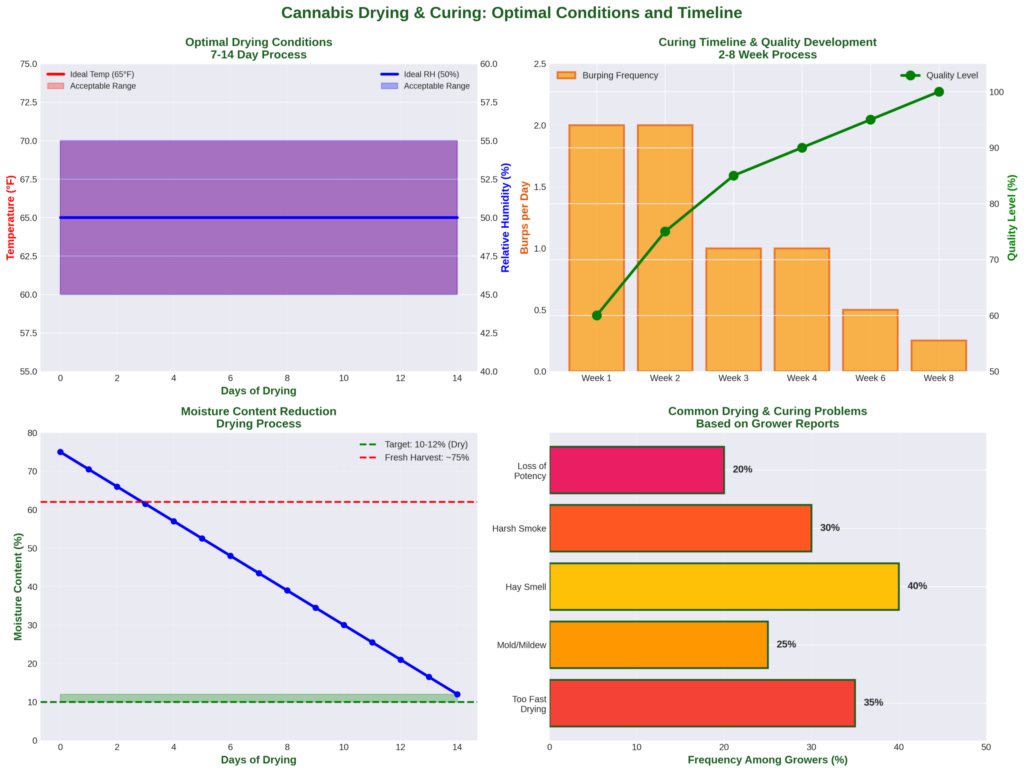
The ideal environment for drying cannabis is a dark, cool, and well-ventilated room. The temperature should be between 60-70°F (15-21°C) and the humidity should be between 45-55%. It is important to maintain these conditions as consistently as possible to ensure a slow and even dry. A small fan can be used to circulate the air, but it should not be pointed directly at the buds, as this can cause them to dry too quickly.
The Drying Process
To dry your cannabis, simply hang the branches or the whole plant upside down in your drying room. The drying process can take anywhere from 7 to 14 days, depending on the size and density of the buds and the environmental conditions. You will know your buds are dry when the small stems snap instead of bend. At this point, the buds are ready to be trimmed (if you are dry trimming) and placed in jars to cure.
🔧 7. Curing Your Cannabis: Unlocking the Full Potential
Curing is the final and most important step in the post-harvest process. Curing is the process of slowly removing the remaining moisture from the buds and allowing the chemical compounds to mature and develop. A proper cure will improve the flavor, smoothness, and potency of your cannabis, and it will also increase its shelf life.
The Science of Curing
During the curing process, a number of important chemical changes take place. The chlorophyll in the buds breaks down, which results in a smoother and less harsh smoke. The cannabinoids and terpenes continue to mature and develop, which results in a more complex and nuanced flavor profile. A 2022 study in Postharvest Biology and Technology highlighted the importance of postharvest operations, including curing, on the final chemical profile of cannabis [4].
The Curing Process
To cure your cannabis, place the trimmed buds in airtight glass jars. The jars should be filled about 75% of the way to allow for air circulation. For the first week, open the jars once or twice a day for a few minutes to allow the moisture to escape. This is known as “burping” the jars. After the first week, you can reduce the burping frequency to once every few days. The curing process can take anywhere from 2 weeks to 2 months, but the longer you cure, the better the final product will be.
📋 Related Guides
- The Complete Beginner’s Guide to Growing Cannabis Indoors
- The Complete Guide to Growing Sativa Strains
- The Complete Guide to Growing Indica Strains
- Training Techniques for Bigger Yields
- Troubleshooting Nutrient Deficiencies
- Climate Control Equipment Guide
- Cannabis Nutrients Buyer’s Guide
❓ 8. Frequently Asked Questions (FAQs)
❓ How do I know when to harvest my cannabis?
The most accurate way to determine the optimal harvest time is to inspect the trichomes with a jeweler’s loupe or a microscope. Harvest when the trichomes are mostly milky white with a small percentage of amber.
❓ What is the difference between wet trimming and dry trimming?
Wet trimming is trimming the buds immediately after harvest, while they are still wet. Dry trimming is trimming the buds after they have been dried. Dry trimming is generally recommended for the highest quality cannabis.
❓ How long does it take to dry cannabis?
The drying process can take anywhere from 7 to 14 days, depending on the size and density of the buds and the environmental conditions.
❓ How long should I cure my cannabis?
The curing process can take anywhere from 2 weeks to 2 months, but the longer you cure, the better the final product will be.
❓ What is the ideal temperature and humidity for drying cannabis?
The ideal temperature for drying is 60-70°F (15-21°C) and the ideal humidity is 45-55%.
Start with premium genetics from Official Cannabis Seeds, Blue Dream, or Sour Diesel, and grow with confidence using the right medium for your garden.
📂 9. Scientific References
[1] Piomelli, D., & Russo, E. B. (2016). The Cannabis sativa Versus Cannabis indica Debate: An Interview with Ethan Russo, MD. Cannabis and Cannabinoid Research, 1(1), 44-46. https://www.liebertpub.com/doi/abs/10.1089/can.2015.29003.ebr
[2] Punja, Z. K., Sutton, D. B., & Kim, T. (2023). Glandular trichome development, morphology, and maturation are influenced by plant age and genotype in high THC-containing cannabis (Cannabis sativa L.). Journal of Cannabis Research, 5(1), 1-18. https://link.springer.com/article/10.1186/s42238-023-00178-9
[3] Livingston, S. J., Quilichini, T. D., Booth, J. K., & Samuels, A. L. (2020). Cannabis glandular trichomes alter morphology and metabolite content during flower maturation. The Plant Journal, 101(1), 30-47. https://onlinelibrary.wiley.com/doi/abs/10.1111/tpj.14516
[4] Das, P. C., & Jayanty, S. S. (2022). Postharvest Operations of Cannabis and Their Effect on Cannabinoid Content: A Review. Postharvest Biology and Technology, 191, 111978. https://www.sciencedirect.com/science/article/pii/S092552142200147X