
🏆 Key Takeaway
Wet trimming is the process of trimming your cannabis immediately after harvest, while the plant is still fresh and full of moisture. This is the preferred method for most large-scale commercial operations due to its efficiency.

Table of Contents
🔍 Introduction: The Final Touch
After months of careful cultivation, the moment of harvest is a triumphant one. But the work is not over yet. Trimming is the final, crucial step in the post-harvest process, a meticulous art form that transforms a freshly harvested plant into the beautiful, potent, and smooth-smoking buds that consumers cherish. It is the process of removing the excess leaves from the cannabis flowers, a task that directly impacts the final product’s appearance, aroma, flavor, and overall quality. A well-trimmed bud is not only more aesthetically pleasing, but it also provides a smoother, more flavorful experience, as the harsh-tasting leaves are removed, leaving only the trichome-rich flower.
This guide will serve as your comprehensive resource for mastering the art of trimming cannabis. We will delve into the great debate of wet trimming versus dry trimming, exploring the pros and cons of each method to help you decide which is right for your situation. We will cover the essential tools of the trade, from precision scissors to automated trimmers. And we will provide detailed, step-by-step instructions for both wet and dry trimming techniques, ensuring you have the knowledge to produce perfectly manicured buds every time. Whether you are a home grower trimming your first harvest or a commercial cultivator looking to optimize your workflow, this guide will provide the insights and techniques you need to elevate your final product to the next level.
📊 Wet Trimming vs. Dry Trimming: The Great Debate
The most fundamental decision a grower must make before trimming is when to do it. This choice boils down to two distinct methods: wet trimming and dry trimming. Each has its own set of advantages and disadvantages, and the best method for you will depend on your climate, your goals, and your personal preference.
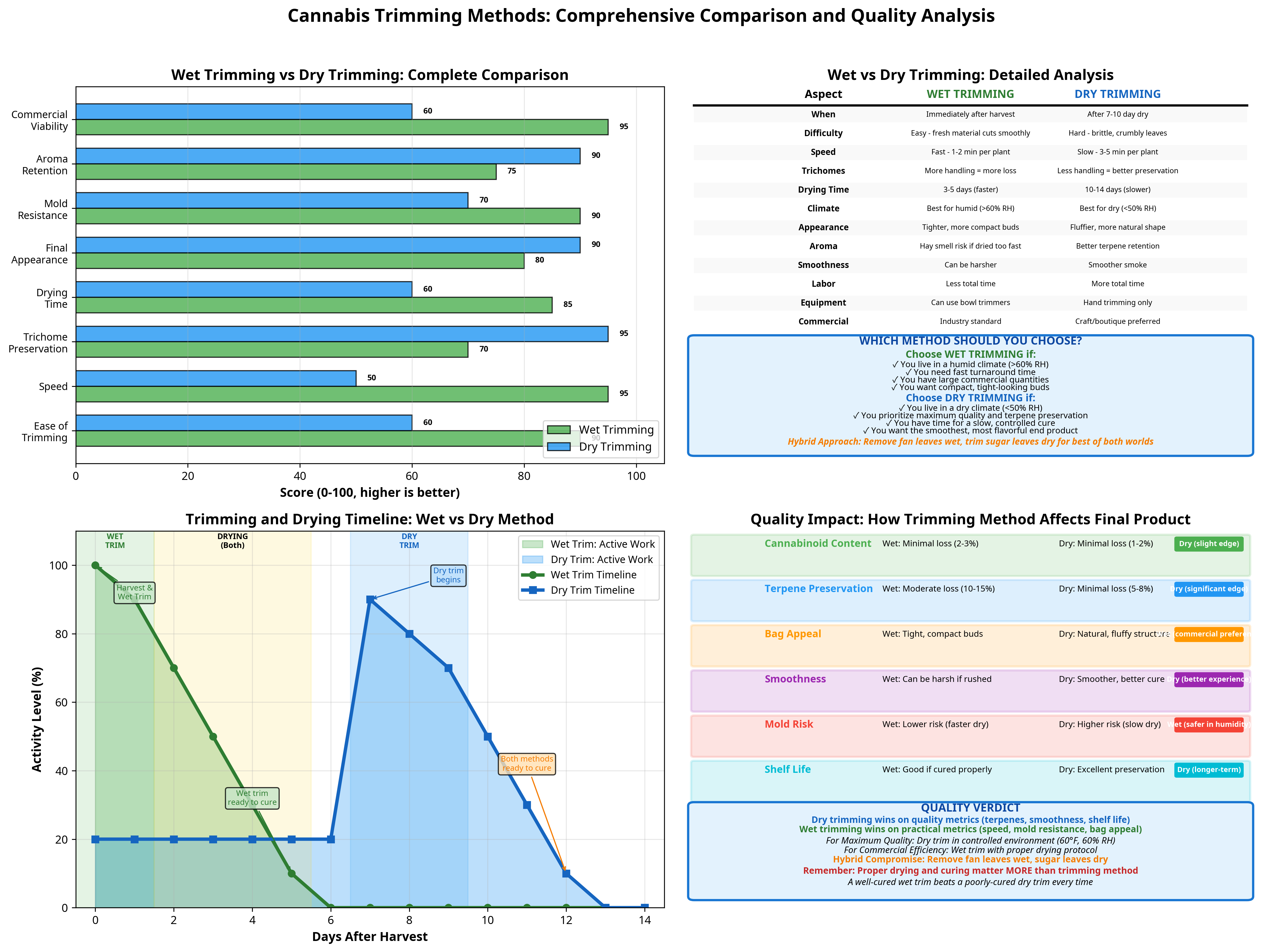
Image created by Manus AI
Wet Trimming
Wet trimming is the process of trimming your cannabis immediately after harvest, while the plant is still fresh and full of moisture. This is the preferred method for most large-scale commercial operations due to its efficiency.
- Pros: It is faster and easier, as the fresh leaves are pliable and easy to cut. It also allows for a quicker drying time, as much of the excess plant material is removed beforehand. This can be a significant advantage in humid climates where mold is a concern.
- Cons: The main drawback of wet trimming is the potential for trichome damage. The fresh, sticky trichomes are more delicate and can be easily ruptured or smeared during the trimming process. It can also lead to a less flavorful and aromatic final product if the buds dry too quickly.
Dry Trimming
Dry trimming, as the name suggests, is the process of trimming your cannabis after it has been dried for 7-10 days. This method is favored by many craft growers and connoisseurs who prioritize quality over speed.
- Pros: Dry trimming is much gentler on the trichomes, as they become more resilient after drying. This results in a more potent and flavorful final product. The slower drying time also allows for a more controlled cure, which can further enhance the aroma and smoothness of the smoke.
- Cons: Dry trimming is a slower, more tedious process. The dried leaves are brittle and can be difficult to remove without crumbling. It also requires a carefully controlled drying environment to prevent the buds from drying too quickly or too slowly.
| Aspect | Wet Trimming | Dry Trimming |
| When | Immediately after harvest | After 7-10 days of drying |
| Speed | Fast | Slow |
| Ease | Easy | Difficult |
| Trichome Preservation | Lower | Higher |
| Drying Time | Faster (3-7 days) | Slower (10-14 days) |
| Mold Risk | Lower | Higher |
| Final Appearance | Tighter, more compact | More natural, fluffy |
| Best For | Humid climates, commercial grows | Dry climates, craft grows |
🔧 Trimming Cannabis: Essential Tools and Equipment
Having the right tools is essential for a successful trimming session. Here is a list of the must-have items:
- Trimming Scissors: A pair of sharp, spring-loaded trimming scissors is your most important tool. Look for a pair with a comfortable grip and a non-stick coating to prevent resin buildup.
- Gloves: Disposable nitrile or latex gloves are a must to keep your hands clean and prevent the sticky resin from getting all over everything.
- Trimming Tray: A trimming tray with a built-in kief screen is a great investment. It will catch all the precious trichomes that fall off during the trimming process.
- Rubbing Alcohol and a Rag: Keep a small bowl of rubbing alcohol and a rag handy to clean your scissors regularly. Resin buildup can make them sticky and difficult to use.
- Comfortable Chair and Good Lighting: Trimming can be a long, tedious process. A comfortable chair and good lighting will make the experience much more enjoyable.
📋 The Art of the Wet Trim: A Step-by-Step Guide
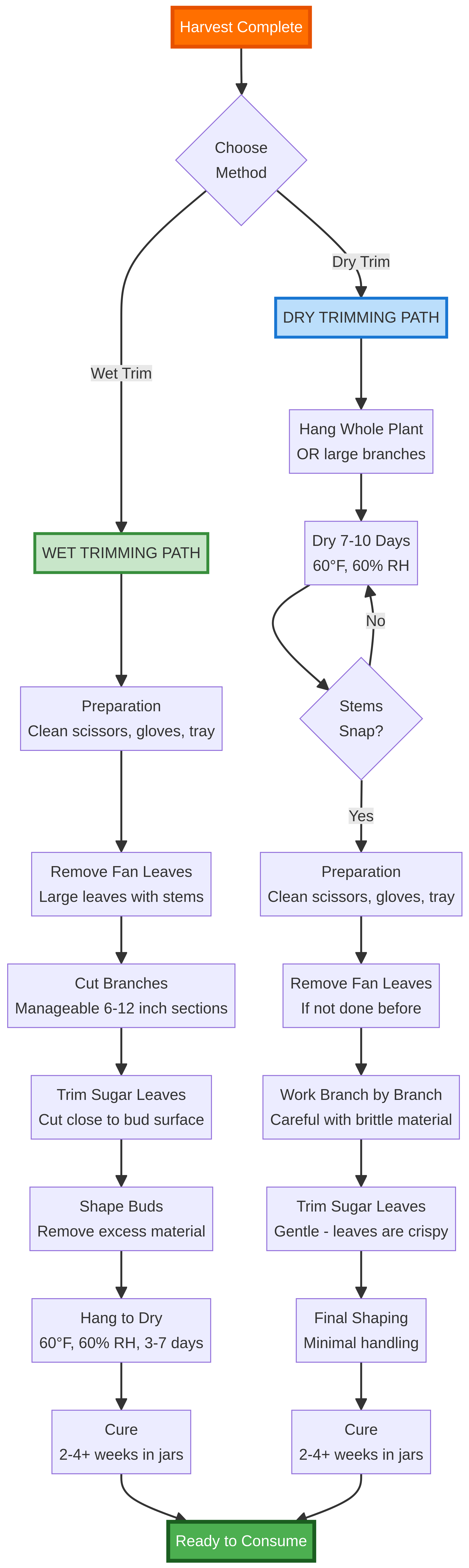
- Prepare Your Workspace: Set up a clean, well-lit area with all your tools within reach.
- Remove Fan Leaves: Start by removing all the large fan leaves. These can be easily plucked off by hand or snipped at the base of the stem.
- Cut Branches: Cut the plant into manageable branches, about 12-18 inches long.
- Trim Sugar Leaves: Holding the branch by the stem, carefully trim away the small sugar leaves that are protruding from the buds. The goal is to create a smooth, uniform surface. Angle your scissors so that you are cutting parallel to the surface of the bud.
- Hang to Dry: Once a branch is fully trimmed, hang it in your drying space. Ensure there is good air circulation and that the branches are not touching each other.
📋 The Craft of the Dry Trim: A Step-by-Step Guide
- Dry the Plant: After harvest, hang the entire plant or large branches in your drying space for 7-10 days. The ideal drying environment is 60°F and 60% relative humidity.
- Check for Dryness: The buds are ready to be trimmed when the smaller stems snap instead of bending.
- Remove Fan Leaves: If you did not remove them before drying, now is the time to do so. They should be dry and easy to pull off.
- Trim Sugar Leaves: This is the most delicate part of the process. Gently handle the dry, brittle buds and carefully snip away the sugar leaves. A gentle touch is key to preserving the trichomes.
- Cure: Once the buds are trimmed, they are ready to be placed in jars for the curing process.
💡 Machine Trimming: Pros, Cons, and Best Practices
For large-scale commercial operations, hand-trimming is often not feasible. This is where machine trimmers come in. These devices can process a large volume of cannabis in a fraction of the time it would take to hand-trim.
- Pros: Speed and efficiency are the main advantages of machine trimmers. They can save a significant amount of time and labor costs.
- Cons: Machine trimmers are notoriously rough on the buds, causing significant trichome loss and a less appealing final product. They are also expensive to purchase and maintain.
If you do choose to use a machine trimmer, it is best to use it for the initial, rough trim and then finish the buds by hand to achieve a higher quality result.
📂 Handling and Storing Your Trim
Do not throw away your trim! The sugar leaves that you remove from your buds are covered in valuable trichomes. This trim can be used to make a variety of products, including:
- Hash
- Edibles
- Tinctures
- Topicals
Store your trim in an airtight container in the freezer to preserve its potency until you are ready to use it.
💡 Common Trimming Mistakes and How to Avoid Them
- Over-trimming: Being too aggressive with your scissors can remove a significant amount of trichomes and reduce the potency of your buds.
- Poor Hygiene: A dirty workspace or unclean tools can introduce contaminants to your final product.
- Handling Buds Too Much: Every time you touch a bud, you are knocking off trichomes. Handle your buds by the stem whenever possible.
- Letting Resin Build Up: Clean your scissors frequently to prevent them from becoming sticky and difficult to use.
For more cultivation information, explore our comprehensive growing guides, comparison articles, and equipment recommendations. Additional resources for experienced growers are available at Pre-Roll Joints, Bluedream.com, officialcannabisseeds.com and weed.de.
❓ Frequently Asked Questions
❓ How long does it take to trim a pound of cannabis?
For an experienced hand-trimmer, it can take 8-10 hours to trim a pound of cannabis. A machine trimmer can do it in under an hour.
❓ What is the difference between a wet trim and a dry trim?
A wet trim is done immediately after harvest, while a dry trim is done after the cannabis has been dried for 7-10 days.
❓ Can I smoke the trim?
While you can smoke the trim, it will be much harsher and less potent than the flower. It is better to use it to make extracts or edibles.
❓ How do I collect the kief from my trimming tray?
Most trimming trays have a fine mesh screen that allows the trichomes to fall through to a collection tray below. You can use a small brush to collect the kief.
❓ Is it better to trim before or after drying?
It depends on your priorities. If you prioritize speed and efficiency, wet trimming is better. If you prioritize quality and potency, dry trimming is the way to go.