
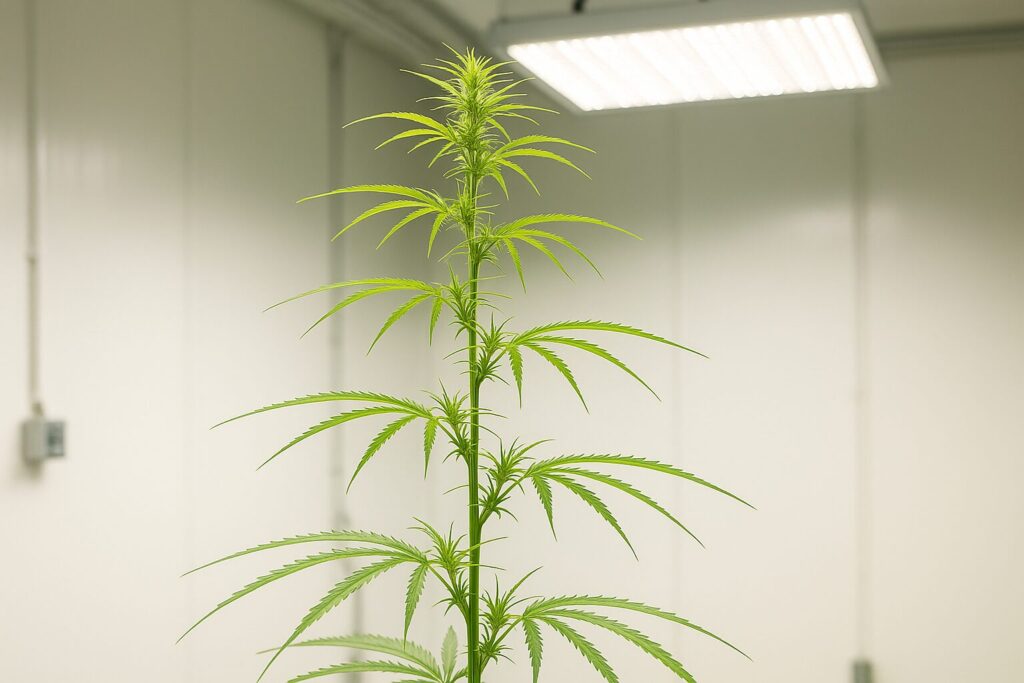
A classic tall and slender sativa plant, showcasing its characteristic narrow leaves and elongated structure.
Table of Contents
📂 Key Takeaways
- Understand Sativa Genetics: Sativa strains are known for their tall stature, long flowering times, and energizing effects. Understanding their genetic origins is key to successful cultivation.
- Manage Plant Height: Due to their significant vertical growth, training techniques like SCROG, LST, and topping are essential for managing sativa plants, especially indoors.
- Optimize for a Longer Flowering Period: Sativas have a longer flowering time (10-12 weeks on average) than indicas. Nutrient and environmental plans must be adjusted accordingly.
- Nutrient Requirements: Sativas are often lighter feeders than indicas, particularly with nitrogen. Overfeeding can lead to nutrient burn and other issues.
- Environmental Control: Maintaining optimal temperature (72-78°F) and humidity (40-50% in flower) is crucial for preventing mold and maximizing resin production.
🔍 Introduction: The Allure of Sativa
Cannabis sativa is a species of the cannabis plant that is native to the hot, dry climates of Southeast Asia, Africa, and Central America. Known for its tall, lanky stature and energizing, cerebral effects, sativa has long been a favorite among cannabis connoisseurs and cultivators alike. In a market often dominated by fast-flowering indicas and hybrids, the art of growing a pure sativa is a rewarding challenge that offers a unique and highly sought-after final product.
Whether you’re looking to purchase high-quality sativa seeds from seedbanks.com or seeking expert cultivation advice, this guide will provide you with a comprehensive, science-backed approach to cultivating sativa strains, from seed selection to harvest. We will delve into the genetic and chemical makeup of sativa, explore the optimal environmental conditions for its growth, and provide detailed instructions on training, feeding, and flowering these magnificent plants. Whether you are a home grower with a passion for pure sativas or a commercial cultivator looking to diversify your crop, this guide will equip you with the knowledge and techniques needed to produce a bountiful harvest of top-quality sativa cannabis.
📂 Understanding Sativa: Genetics and Characteristics
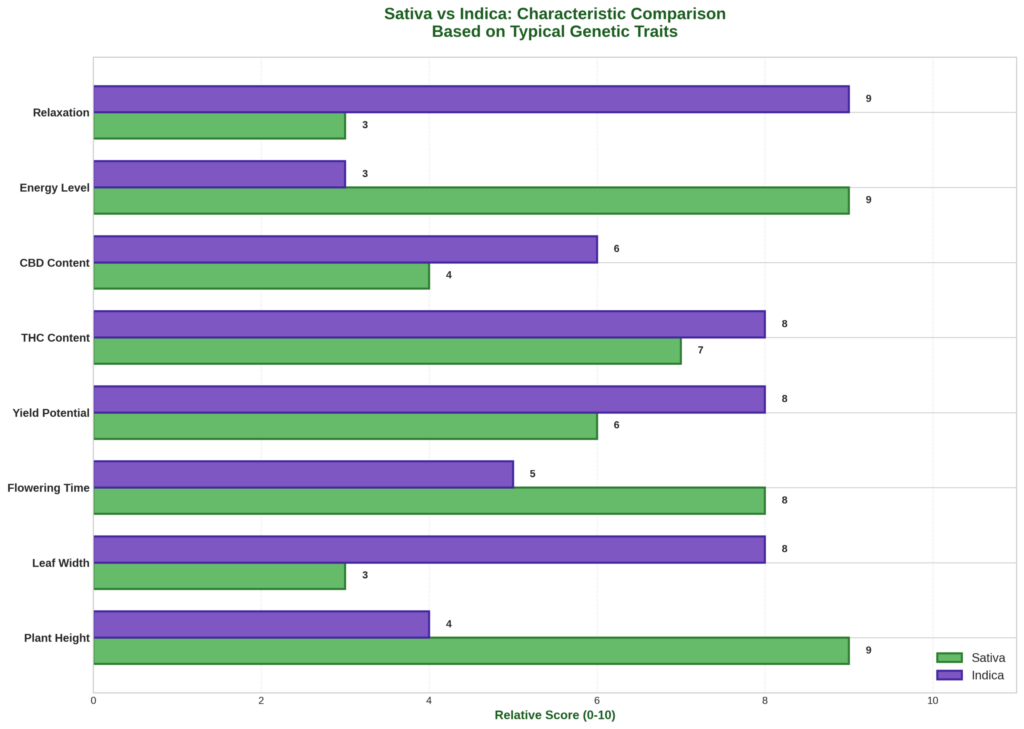
The term “sativa” is often used to describe cannabis strains that produce uplifting and energetic effects. However, the distinction between sativa and indica is more complex than just the subjective experience of the user. Recent scientific research has challenged the traditional classification system, suggesting that the chemical profile of a strain, particularly its cannabinoid and terpene content, is a more accurate predictor of its effects than its genetic lineage alone [1].
The Sativa vs. Indica Debate: A Scientific Perspective
A 2021 study published in Nature Plants found that the genetic distinction between sativa and indica is not as clear-cut as once believed. The study analyzed the genomes of over 100 cannabis strains and found that the labels “sativa” and “indica” do not necessarily correspond to a distinct genetic heritage [2]. Instead, the researchers concluded that the chemical profile of a strain is a more reliable indicator of its effects.
“Our findings show that the sativa/indica paradigm is a poor predictor of the chemical composition of cannabis, and that the same strain name can be used for plants with vastly different chemical profiles.” – Recent advances in Cannabis sativa genomics research [1]
Despite these findings, the terms sativa and indica are still widely used in the cannabis community to describe the general characteristics of a strain. For the purposes of this guide, we will use the term “sativa” to refer to strains that exhibit the classic sativa growth patterns and produce the uplifting effects that are commonly associated with the name.
Typical Sativa Traits
| Characteristic | Description |
| Plant Structure | Tall and lanky, with long branches and significant space between nodes. |
| Leaves | Long, thin, and finger-like with a light green color. |
| Flowering Time | Longer than indicas, typically 10-12 weeks, but can be as long as 16 weeks. |
| Climate | Prefers warm, equatorial climates with long summers. |
| Effects | Uplifting, energetic, creative, and cerebral. |
| Aromas | Often described as sweet, fruity, or spicy. |
🌱 Optimal Growing Environment for Sativas
Creating the perfect environment is crucial for cultivating healthy and productive sativa plants. Due to their equatorial origins, sativas thrive in warm, humid conditions with plenty of light. Replicating this environment, especially indoors, is the key to unlocking their full genetic potential.
Lighting Requirements
Sativas require a significant amount of light to fuel their vigorous growth. Indoors, high-intensity discharge (HID) lights, such as metal halide (MH) and high-pressure sodium (HPS), have traditionally been the go-to choice for sativa cultivation. However, modern LED grow lights are becoming increasingly popular due to their energy efficiency and lower heat output. For sativa cultivation, it is recommended to use a full-spectrum LED light with a power output of at least 600 watts per square meter.
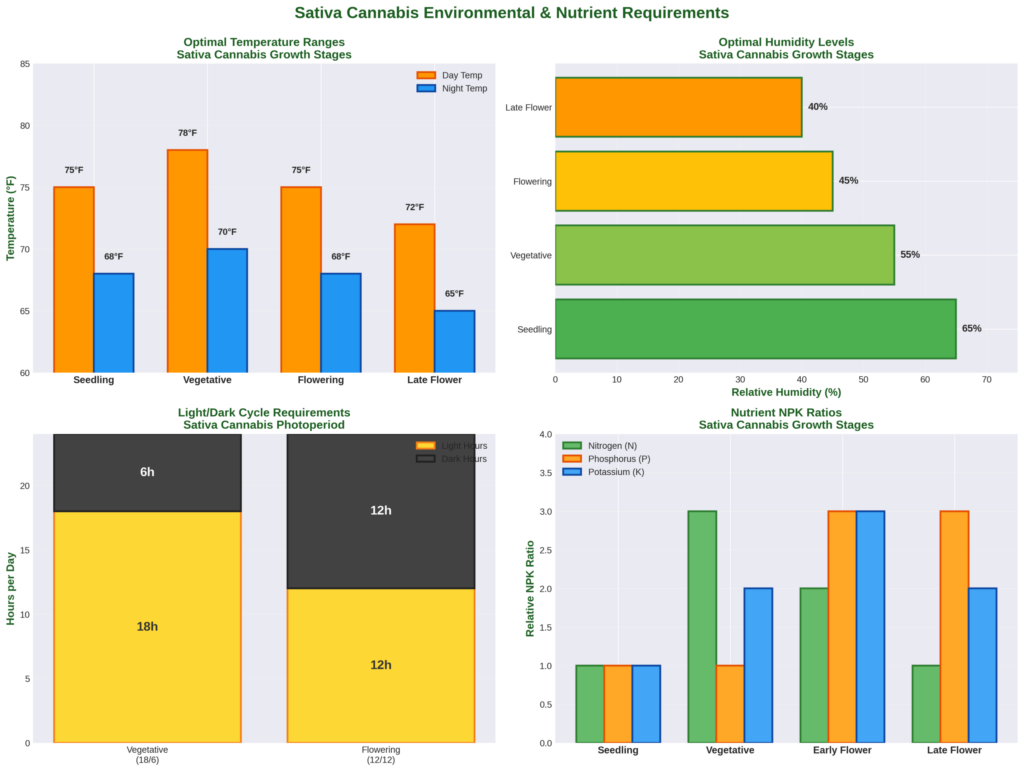
During the vegetative stage, sativas should receive 18-24 hours of light per day. Once you are ready to induce flowering, the light cycle should be switched to 12 hours of light and 12 hours of darkness. It is crucial to maintain complete darkness during the dark period, as any light leaks can stress the plants and potentially lead to hermaphroditism.
Temperature and Humidity
Sativas prefer a warm and humid environment, especially during the vegetative stage. The ideal temperature range for sativa cultivation is between 72-78°F (22-26°C) during the day and 65-70°F (18-21°C) at night. During the flowering stage, it is recommended to lower the temperature slightly to 70-75°F (21-24°C) to help preserve the delicate terpenes and prevent heat stress.
The ideal humidity level for sativas changes throughout their life cycle. During the seedling and vegetative stages, a higher humidity level of 60-70% is beneficial for promoting vigorous growth. As the plants enter the flowering stage, the humidity should be gradually reduced to 40-50% to prevent mold and mildew from developing on the dense buds.
Ventilation and Airflow
Good ventilation and airflow are essential for maintaining a healthy growing environment and preventing pests and diseases. A constant supply of fresh, CO2-rich air is necessary for photosynthesis and healthy plant growth. An exhaust fan and an oscillating fan are recommended to ensure proper air circulation and to prevent stagnant air pockets from forming around the plants.
Proper airflow also helps to strengthen the stems and branches of the plants, making them better able to support the weight of the heavy buds during the flowering stage.
🔧 Nutrient Management for Sativa Strains
Proper nutrient management is essential for growing healthy and productive sativa plants. While sativas are known for their vigorous growth, they are often lighter feeders than their indica counterparts. Overfeeding can lead to nutrient burn and other issues, so it is important to start with a lower dose of nutrients and gradually increase it as the plants mature.
NPK Ratios and Feeding Schedules
The ideal NPK (Nitrogen, Phosphorus, Potassium) ratio for sativas changes throughout their life cycle. During the vegetative stage, a higher nitrogen ratio is needed to support the rapid growth of leaves and stems. A balanced NPK ratio of 3-1-2 is a good starting point for the vegetative stage.
As the plants transition to the flowering stage, their nutrient requirements change. Nitrogen should be reduced, while phosphorus and potassium should be increased to support bud development and resin production. A common NPK ratio for the flowering stage is 1-3-2 or 2-3-3. It is also important to supplement with calcium and magnesium, especially when using reverse osmosis (RO) water or growing in coco coir.
Common Nutrient Deficiencies in Sativas
Sativas are prone to certain nutrient deficiencies, particularly magnesium and calcium. A magnesium deficiency often appears as yellowing between the veins of the older, lower leaves. A calcium deficiency can cause stunted growth and distorted new leaves. To prevent these deficiencies, it is recommended to use a cal-mag supplement throughout the entire life cycle of the plant.
🌱 Training Techniques for Tall Sativa Plants
Due to their tall and lanky stature, training is essential for managing sativa plants, especially when growing indoors. Training techniques help to control the height of the plants, create an even canopy, and maximize light exposure to the lower branches. This results in higher yields and a more manageable grow.
Low-Stress Training (LST)
Low-stress training (LST) is a gentle training technique that involves bending and tying down the branches of the plant to create a more even canopy. LST is a great option for beginners as it is less stressful on the plants than high-stress training techniques. To perform LST, simply bend the main stem and branches of the plant and tie them down with soft plant ties. This will encourage the lower branches to grow upwards and create a more even canopy.
Screen of Green (SCROG)
The screen of green (SCROG) method is a more advanced training technique that involves using a screen or net to create an even canopy. The plants are grown through the screen, and the branches are tucked under the screen as they grow. This forces the plants to grow horizontally, creating a flat and even canopy that is ideal for maximizing light exposure and yield. SCROG is a great option for sativa growers as it helps to control the height of the plants and create a more manageable grow.
Topping and FIMing
Topping and FIMing are high-stress training (HST) techniques that involve cutting the main stem of the plant to encourage the growth of multiple colas. Topping involves cutting the main stem between the nodes, while FIMing involves cutting the new growth at the top of the plant. Both techniques result in a bushier plant with multiple main colas, which can significantly increase yield. However, it is important to only perform these techniques on healthy, vigorous plants, as they can be stressful on the plants.
🌱 6. The Sativa Flowering Stage: A Test of Patience
The flowering stage is the most exciting part of the cultivation process, but it is also the most challenging, especially with sativas. Due to their long flowering time, sativas require a great deal of patience and attention to detail to produce a successful harvest.
Flowering Timeline and Bud Development
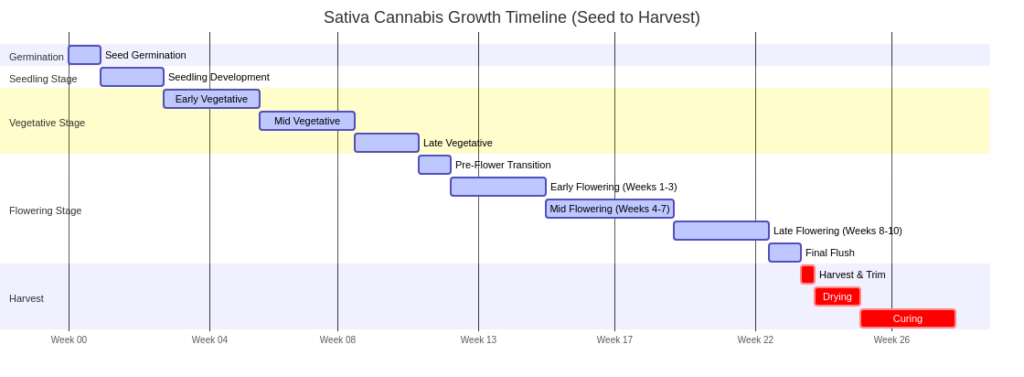
The flowering stage for sativas can last anywhere from 10 to 16 weeks, depending on the strain. During this time, the plants will continue to stretch and grow, and the buds will begin to develop. It is important to continue to monitor the plants closely for any signs of nutrient deficiencies, pests, or diseases.
During the early flowering stage (weeks 1-3), the plants will continue to stretch, and the first pistils will begin to appear. In the mid-flowering stage (weeks 4-7), the buds will begin to fatten up, and the resin production will increase. In the late flowering stage (weeks 8-12+), the buds will become dense and heavy, and the trichomes will begin to mature.
Harvesting Your Sativa Plants
The key to harvesting sativas is to be patient. Harvesting too early can result in a lower yield and a less potent product. The best way to determine when to harvest is to inspect the trichomes with a jeweler’s loupe or a microscope. The trichomes are the small, mushroom-shaped glands that cover the buds and contain the cannabinoids and terpenes.
When the trichomes are clear, the plant is not yet ready to be harvested. When the trichomes are milky white, the plant is at its peak THC content and will produce an energetic and uplifting high. When the trichomes are amber, the THC has begun to degrade into CBN, which will result in a more relaxing and sedating high. For sativas, it is generally recommended to harvest when the trichomes are mostly milky white with a small percentage of amber.
📂 Drying and Curing for Maximum Flavor and Potency
Drying and curing are the final and most important steps in the cultivation process. Proper drying and curing will preserve the flavor and potency of your cannabis and ensure a smooth and enjoyable smoking experience.
After harvesting, the branches should be hung upside down in a dark, cool, and well-ventilated room. The ideal temperature for drying is 60-70°F (15-21°C) with a humidity level of 45-55%. The drying process can take anywhere from 7 to 14 days, depending on the size and density of the buds.
Once the buds are dry, they should be trimmed and placed in airtight glass jars to cure. The jars should be opened once or twice a day for the first week to allow the moisture to escape. After the first week, the jars can be opened once every few days. The curing process can take anywhere from 2 weeks to 2 months, but the longer you cure, the better the final product will be.
📋 Related Guides
- The Complete Beginner’s Guide to Growing Cannabis Indoors
- LED Grow Light Buyer’s Guide
- Cannabis Nutrients Buyer’s Guide
- Training Techniques for Bigger Yields
- Troubleshooting Nutrient Deficiencies
- Climate Control Equipment Guide
- Ventilation and Carbon Filter Guide
❓ Frequently Asked Questions (FAQs)
❓ How tall do sativa plants get?
Sativa plants can grow very tall, often reaching heights of 10-15 feet (3-4.5 meters) or more when grown outdoors. Indoors, their height can be managed with training techniques like SCROG and topping.
❓ How long do sativas take to flower?
Sativas have a longer flowering time than indicas, typically 10-12 weeks, but some strains can take as long as 16 weeks to fully mature.
❓ Are sativas difficult to grow?
Sativas can be more challenging to grow than indicas due to their long flowering time and tall stature. However, with the right knowledge and techniques, they can be successfully cultivated by growers of all experience levels.
❓ What are the best sativa strains for beginners?
Some good sativa-dominant strains for beginners include Green Crack, Jack Herer, and Durban Poison. These strains are known for their resilience and relatively shorter flowering times.
❓ How can I control the height of my sativa plants?
Training techniques like SCROG, LST, and topping are essential for managing the height of sativa plants, especially when growing indoors. These techniques help to create a more even canopy and maximize light exposure to the lower branches.
📂 Scientific References
[1] Hurgobin, B., Tamiru-Oli, M., Welling, M. T., & Lichtenzveig, J. (2021). Recent advances in Cannabis sativa genomics research. New Phytologist, 231(5), 1736-1752. https://nph.onlinelibrary.wiley.com/doi/abs/10.1111/nph.17140
[2] Schwabe, A. L., & McGlaughlin, M. E. (2021). Comparative Genetic Structure of Cannabis sativa Including Federally Produced Cannabis and Commercial Cultivars. Frontiers in Plant Science, 12, 675770. https://www.frontiersin.org/articles/10.3389/fpls.2021.675770/full
[3] Piomelli, D., & Russo, E. B. (2016). The Cannabis sativa Versus Cannabis indica Debate: An Interview with Ethan Russo, MD. Cannabis and Cannabinoid Research, 1(1), 44-46. https://www.liebertpub.com/doi/abs/10.1089/can.2015.29003.ebr
[4] Clarke, R. C., & Merlin, M. D. (2016). Cannabis Taxonomy: The ‘Sativa’ vs. ‘Indica’ debate. HerbalGram, (110), 44-51. https://www.researchgate.net/publication/322819487_Cannabis_Taxonomy_The_’sativa’vs’indica’_debate